As a small business owner, you might be tempted to take matters into your own hands when it comes to increasing your website’s organic reach. It may seem like finding the right keywords using some popular tools and stuffing your pages with loads of content because “content is king”.
However, the game of SEO extends over keyword research and content creation. It is an extensive and full-time job that can be best left for an expert to handle.
Still not convinced? Here are three main reasons why you must consider SEO consultant service for your website’s growth.
Take a look.
Off-Site SEO & Content Marketing Strategy
If you speak with one of the SEO experts, you’ll realize that it’s more than just optimizing your site. The most effective SEO practices employ a comprehensive approach and offer a wide range of solutions to boost your website’s visibility.
What is the significance of this?
Numerous things should occur “off-page” to boost your SEO. This includes strategic link building and building citations. It would be helpful to have other trustworthy websites that could link back to your website as authoritative votes (hence the word “backlink “).
A skilled SEO consultant will ensure that your Google My Business account is authentic and optimized for search. It is particularly beneficial to find a consultant who has a deep understanding of the local market and the latest trends. For instance, an SEO company that is specialized in Silicon Valley businesses.
Free up Your Time & Money
If you’re beginning to feel overwhelmed by the plethora of talk of SEO, it’s normal. SEO can be fun; however, make no mistake: SEO is a full-time job. Trying to tackle it yourself can only distract you from the essential aspects of running your business.
SEO is a constant process that requires hours of testing, failures and research. It can consume time for working business people. In the worst case, you’ll be spinning your wheels with outdated methods which won’t benefit (or might even hurt) the SEO of your business.
When you weigh in all these reasons, hiring an experienced SEO consultant will make sense. They’re experts and know the ins and outs of their field, leaving you free to concentrate on your work.
What happens to the money you invest in SEO services? You’ll more than get the money back with a high ROI. Organic search (the core purpose of SEO) generates 51% of the web traffic – over five times the money spent on other advertising methods.
An expert can bring fresh insight to your marketing and website initiatives. Their prior experience coupled with an outsider’s viewpoint of your company can result in exciting and lucrative fresh marketing strategies.
Bring in the Right Kind of Website Visitors
Bettering your SEO efforts involves more than just bringing more visitors to your site. For instance, if you’re trying to attract customers within or around South Carolina, it won’t help draw customers from Miami or New York.
SEO experts concentrate on bringing suitable visitors to your website rather than just increasing the number of people who visit your site. This requires extensive analysis to find out what users are looking for and then altering your web content to satisfy those who have that requirement.
A part of this is identifying the appropriate intention-based keywords that you can use for your website. This can help drive visitors to your website looking for the exact type of product or services and are often eager to buy and not only people who are just browsing to gather data.
They also know (and can utilize) the analytics on your site to find out what is working and what’s not. By constantly updating your website’s content and marketing activities, an SEO consultant can increase your sales, not just your visitors.
Final Word
Learning SEO is a full-time task and one that you might lack the energy or the desire to devote yourself to. It would be beneficial to concentrate on running your primary business and let an experienced SEO expert handle your website’s organic growth.
I expect that you are using Free SEO tools but facing some problems in ranking your website. There are chances that you can make a brand of your online business, but these chances are pretty low with Free SEO tools.
If you are struggling to mark your online presence, you must start using paid SEO tools instead of free ones because Paid SEO tools will give you a more detailed report of your competitor’s website.
With proper analysis, you will be able to replace your competitor on every search engine.
In this article, I’ll be discussing five signs of your website that indicate that you should start using paid SEO tools now. But, first, let’s Optimize for SEO to get more and more engagements.
5 Signs Indicating you to use Paid SEO tools
#1 Conversion Rate is low
You are getting enough impressions to attract many visitors/customers, but you are getting enough CTR, so eventually, you aren’t getting enough people on your website. This is a problem because your website lacks some crucial aspects that search engines require.
Generally, free SEO tools don’t have enough data to analyse the flows of a website; to thoroughly analyse your website and understand what is stopping your website from converting your impressions into visits; you should use paid SEO tools.
Paid SEO tools will give you detailed and correct information about your website’s optimization. In addition, paid SEO tools will help you optimize your website according to search engines.
#2 Not getting enough Sales
There are situations where you are getting visitors, but your website cannot convert them into your customers. If you are struggling with this problem and free SEO tools aren’t helping you. So, now it’s time to switch to paid SEO tools so that you can understand what is wrong with your content and your website’s layout.
You have enough backlinks and good off-page SEO to attract visitors, but your content has some problems. Once someone lands on your website, then it’s your content that can convert the visitor into your customer.
Paid SEO tools like Grammarly can help enhance your website’s content.
#3 Unable to generate quality content
This is somewhere similar to the above situation, but here you have neither visitors nor the content to upgrade. So here you are struggling with the essential requirement of a website that is content, Right? And Free SEO tools aren’t effective in helping with content quality.
Only paid SEO tools can help you in such situations because they will make the content creation process much easier for you.
For example, Grammarly will analyse each sentence you write and find errors, if any. If it finds any errors, it will highlight the particular word/phrase where the error is present.
Apart from this, Grammarly will suggest possible corrections that will undoubtedly help you generate better content relatively quickly.
#4 Unable to find worthy keywords
Keyword Research is the most important aspect of SEO. You can’t rank on search engines without proper keywords, and without keywords, you can’t even make your SEO strategy. But, on the other hand, if you pick the wrong keywords, you will waste your effort and time.
You have to be very careful while picking your keywords to work on. However, I discovered that most of them aren’t accurate enough to rely on while using Free SEO tools. Thus, for me, Paid SEO tools like SEMRUSH, AHREFS work perfectly fine.
These tools are regularly maintained and upgraded by a bunch of professionals, and these are entirely reliable.
#5 Email Marketing isn’t working
If you are facing problems with email marketing, then you are pretty much sorted with the website’s optimization and content-related issues; if you aren’t, then before email marketing, you should concentrate on them. Then, once you are satisfied with your content, you can use Email marketing to grab some extra visitors.
If you are already generating quality content and your website is also well-optimized. Still, emails aren’t working for you, then it may be because of a wrong template, or your mails are piling into the receiver’s spam folder.
You need to pick a reliable tool for email marketing because most of the free email marketing tools aren’t very effective. So you have to keep on shuffling with some paid SEO or email marketing tools and need to analyse which one is working for you.
Final Verdict
Using paid SEO tools for your business, you can also generate income and increase your online presence through some free SEO tools. But, again, as mentioned above, the chances are pretty low. However, many Digital Marketing Companies, such as an SEO Company in India, SEO Company In the USA, SEO services in Vietnam, etc. are started using many tools for their clients.
If you are using some paid SEO tools, then no doubt they will give a good ROI. It is mainly because most of the paid SEO tools are accurate and precise. This makes them reliable to use.
To get faster results and you want to make your website/business a brand, then I think it is entirely worth it to invest in some good Paid SEO tools.
Aashirvad Kumar is a Writer at Tele Trick Mania and SEO Executive at Optimize For SEO. He has been blogging since 2016 in the technology niche. He has experience of more than 5+ years in Digital Marketing.
If you haven’t been using email marketing tactics to support your SEO efforts, now is the time to start. In today’s episode of Whiteboard Friday, Cyrus explains how to use the complementary powers of these strategies over and over again, so that each becomes bigger and more powerful the more you do it.
Click on the whiteboard image above to open a larger version in a new tab!
Video Transcription
Howdy, Moz fans. Welcome to another edition of Whiteboard Friday. I’m Cyrus Shepard. I hope you’re enjoying this video no matter which day of the week you’re watching it on. Today I want to talk about SEO and email marketing, specifically five simple tips for SEO and email marketing flywheels.
What is a flywheel?
So when I talk about SEO and email marketing flywheels, what do we mean by flywheel? Well, that’s where we’re using the power of SEO to grow our email marketing list and conversely using our email marketing list to grow our SEO for more website traffic. There are actual ways you can do that and doing it over and over and over again so that each becomes bigger and more powerful the more you do it.
So it’s like a flywheel. It’s really hard to get started. But as you get going, it gets easier and easier and easier, and everything grows a little bit more effectively. So if you’re an experienced SEO and email marketer, this video may not be for you. But if you primarily do SEO and you’re looking for ways to improve your mail marketing, or you’re primarily an email marketer and you’re looking for ways to grow your SEO, these are the tips for you.
Set goals
So let’s talk about our goals. What are we trying to accomplish with this email SEO marketing flywheel? First of all is simply more visitors, more visitors to your website content, because more visitors usually leads to more links, sharing, and things like that. The links and sharing can be positive SEO signals to Google, which actually lead to higher rankings.
So if we can get more people to our content through our email, the downstream effect of that could be higher rankings and more traffic generally naturally generated through Google search results. But also we want bigger and more powerful email marketing lists because your marketing list is one of your best marketing channels, especially if you segment users, which we’re going to talk about in just a little bit.
Ultimately, we want more conversions and sales. Whatever your marketing and business goals are, that’s what we want to achieve with this flywheel effect.
How to achieve those goals
1. Incentivize sign-ups
So let’s talk about the specifics, how are we going to get into it. First of all, we want to get more sign-ups from our content, from our website material. So we want to incentivize sign-ups.
Now the important thing to realize is you don’t have to incentivize sign-ups just through SEO. You can do it through any marketing traffic channel. That’s direct traffic, social media traffic, and referral traffic. Any way that people are visiting your content, you want to target those to incentivize for sign-ups to your email marketing list. So one of the ways I like to do this through SEO is through what a lot of people call content power-ups.
That’s where you’re incentivizing sign-ups by offering bonus or exclusive content in exchange for people to sign up for your list. For example, this is “5 Simple Tips for SEO and Email Marketing.” What if at the end of this post I would offer five additional bonus tips in exchange for signing up for exclusive content? The idea is that you want to offer something that they can’t find on the website. That could be a tool, some additional content, downloads, any sort of free bonus, a coupon, whatever you can think of, something exclusive to incentivize those sign-ups from your content.
2. Segmentation
Second tip, we don’t want to dump everything onto the same large email list. We want to make sure that we’re segmenting those sign-ups by topic and interest.
Unless your site is very narrowly focused, you generally want to segment your list among different topics. For example, here at Moz, we cover SEO, but we cover many, many different types of SEO based on user interest. So there’s local SEO, there’s technical SEO, there’s copywriting, there’s link building, all these niche interests that we want to segment users by.
So there’s a couple different ways to segment. One is self-segmentation, where people can check a box and say I’m interested in this and this and this. But a little bit easier is automatic segmentation based on the type of content that people are visiting. So on your technical SEO pages, if that’s what you were doing, you would put people onto a technical SEO sign-up list and make it clear that they’re receiving technical SEO tips.
Always make it clear what they’re receiving. But this segmentation is going to come in useful in just a little bit.
3. Content promotion
So the third thing, the third tip, and this is where we’re getting into the meat of it, is content promotion. This is where we’re using our email list to send traffic back to our website. When people think about SEO and email marketing flywheels, this is what they typically think about.
They think about the content promotion aspect. Now the important thing is we’re not trying to promote all of our content. No, we want to promote our best content, because your website, your visitors are coming, they’re doing a Google search. They’re not necessarily aware of what your best content is, and that’s why you want to deliver your best content. Importantly, you want to personalize it with the segmentation.
You’re not promoting all your content to all your visitors. You’re personalizing it based on their interests because you already segmented them out based on the type of content that they consumed. So if we’re sending out a technical SEO newsletter, we’re sending the best of our technical SEO content to those people who have already indicated an interest in technical SEO.
One of the most important things to remember, you don’t have to just promote your new content. It’s okay to promote the best of your old content as well, because again your users aren’t aware of what that is. So oftentimes in an introductory email, maybe the first email they receive in a series, you can promote and highlight old posts or even do it in a series.
“This is our best content over the last five years. Make sure you don’t miss this.” That old content, if it’s truly the best, will oftentimes outperform your newer content. So that’s how you can personalize and segment and send out your best content to get more promotion and more eyeballs on your best SEO content and hopefully more links, sharing, and all that to keep the flywheel going.
4. Incentivize sharing
So not only did we incentivize sign-ups, now that we’re in the email part and sending emails out, we want to incentivize sharing. That’s my fourth tip, incentivize sharing, because we don’t only want people to visit and read the content, we’re hoping that they’ll share it with their audience as well. One of the ways I like to do that is to segment my best sharers.
Now what do I mean by this? I’m not only segmenting by interest, but I’m segmenting by influence. So I might put together a list of influencers or people I know in my particular industry that have signed up. Maybe I’ve targeted them. Just like I offer people exclusive content to sign up for the email list, I’m offering my sharers exclusive content before I share it with the rest of the world.
So I might email my sharing segment and say, “Hey, we just published a post. We haven’t told anybody. We’re going to announce it on social tomorrow. But I wanted to let you know about it ahead of time if you want to share it with your followers.” Because we made it exclusive, we haven’t shared it with our followers, it gives our influencers something to share and it makes them feel special and sharing it out with their own audience.
There are different strategies that you can use to do that. But it is often an effective tactic to segment your best sharers. It’s a little advanced, but that can incentivize sharing and hopefully help out your SEO.
5. Keyword research
Finally, when we talk about SEO, we talk about keyword research. Keyword research is one of those SEO areas that works really well in incorporating into email.
Now, here at Moz, we have a tool called Keyword Explorer. There are other tools out there. But millions of keywords suggestions. Traditionally, in SEO, you use keyword research to determine your content, targeting keywords that your audience has interest in. We have lots of guides here at Moz on how to do that, how to target content around keywords.
But you can also use that keyword research in your emails. One of the most important places to use them is your email subject line. If you know the interest that your audience is interested in, through your segmentation, you can start to understand the keywords that drove them to their content, and using those same keywords in your email subject lines can improve your open rates. But that’s not the only place.
One of my favourite places to use keywords is in the sign-up CTA. So when you have a sign-up form on your website, you can use a generic sign-up form, like, hey, sign up for our newsletter. Okay, that’s not very effective. But if you use the keywords, the targeted keywords sign up for our technical SEO tips or our local SEO or our best dog food recipes, the keywords that people use to find your website are going to be the best keywords to incorporate into your CTAs to get them to sign up. You use keywords in your email subject lines to get them back to your content and so on and so forth. It’s another part of the effective flywheel.
Bonus: turn your best emails into content
So finally, bonus tip, I want to make sure that you don’t forget to turn your best emails into content. Your content doesn’t have to live exclusively in separated channels. If you’re writing killer emails to your audience, that get a lot of engagement, that have super high open rates, those are emails that you can turn into content for your website.
Or if you have a popular newsletter, you can simply archive all your emails into HTML so people can search. You may not want to do that for certain reasons if the quality isn’t very good. But if the emails are actually good, go ahead and turn them into content, because that’s going to help your SEO as well.
All right. I hope you enjoyed these tips. If you have any questions about email or SEO, please reach out to the team here at Moz. We’re here to help. Hope you enjoyed it, everybody, and please share this video. All right, thanks.
Investing time into SEO strategies — no matter how basic or advanced — gives a web presence to your brand that is within your control.
Increasing your visibility on search engine results pages (SERPs) is a worthwhile payoff. Many people use major search engines like Google and Bing to discover new brands. According to findings from SEO analytics software Moz, “66% of distinct search queries resulted in one or more clicks on Google’s results.”
Ultimately, SEO is one of the single-best marketing channels for optimizing return on investment (ROI). The data speaks for itself: According to Statista, SEO has been the most profitable form of marketing in the past four years — even topping content and email marketing.
This is why brands should prioritize SEO in their marketing efforts. Likewise, brands with in-house marketing teams of their own should be actively implementing marketing channels related to SEO. Before we jump into the specifics, it’s important to first understand what SEO stands for.
What is SEO?
SEO, which stands for search engine optimization, is the process of increasing the quantity and quality of traffic to a website through organic search engine results. SEO encompasses the relationship between a brand and major search engines. Essentially, brands develop a rapport with prominent search engines to establish their credibility as an authoritative source for information, especially as it relates to their industry.
There are effective, proven and practical steps to increasing visibility in major search engines. In fact, many of those steps are free of charge and fairly simple, even for beginners. Why is it so crucial, though? Here are three reasons you should pay attention to SEO for brand marketing.
1. SEO increases visibility in search engines and boosts consumer awareness.
Investing time into SEO strategies — no matter how basic or advanced — gives a web presence to your brand that is within your control. If your brand is new to SEO, it’s a good idea to link your URL with Google Search Console and Bing Webmaster Tools. From here, you can get your feet wet and familiarize yourself with SEO data related to your website. These programs help you learn which specific keywords and phrases people type or speak into a search engine to find your brand’s website.
Additionally, while many people searching for brands may already be existing customers, SEO increases visibility for new and prospective customers. A brand’s search engine visibility can be optimized based on location. For example, a dispensary brand based in Atlanta can be optimized to show up in results for “Atlanta dispensary.”
Although many experts would claim that SEO marketing can be done without media awareness, I fundamentally disagree as an expert on both SEO and public relations (PR). When you develop relationships with reputable journalists who write for credible news outlets, their reporting can — and does — show up in search results. These results are organic, meaning any interviews or quotes can help boost your brand’s rankings in searches. While boosting your search results of course helps you reach more potential customers, having credible news coverage puts you on everyone’s radar, including other journalists who could write about you in the future or even investors looking to fund new projects.
2. SEO is easy to implement.
Even if you’ve never done anything with SEO marketing for your brand, it’s fairly simple to get started. Even a little effort can be worthwhile.
Rather than hoping search engines will work in your favour naturally, brands can take simple steps to ensure visibility. Even if a brand is already notable and gaining traction on search engines without a planned, coherent strategy, these tips will still help. Here are a few practical steps.
1. List your website on Google, Bing and any other engines you might want.
Beyond the fundamentals, I’d recommend brand leaders consider collaborating with an established marketing firm to develop a long-term, data-driven SEO strategy.
3. SEO is extraordinarily cost-effective.
You don’t have to pay to be listed on major search engines. Google, for instance, crawls — or scans and reads — listed websites multiple times a day for new and credible information to include and reflect in its results pages.
This is why SEO is a free form of marketing compared to paid advertisements in magazines, on billboards and beyond. Although specialty SEO software can be expensive, the basics are completely free. Plus, because of the low overhead costs, hiring an SEO marketing team will typically be less expensive than traditional print media — or even social media marketing campaigns — on average.
Do the SEO basics, reap the search engine rewards.
Implementing SEO into your brand’s marketing is fairly simple. To do the basics, you don’t need to be an expert. Any marketing professional can learn from scratch and gain some knowledge even in a short amount of time by putting free training and resources to use.
However, keep in mind that since search engines are constantly changing their algorithms, marketing teams need to be frequently monitoring the latest trends, tips, tricks, data and more as it relates to SEO. Brands without the capacity to take on SEO marketing internally should consider partnering with an experienced SEO firm to do so on their behalf. In the meantime, get optimizing.
Digital marketing enables businesses to extend their reach through a variety of channels
Before the internet took the corporate world by storm, businesses would buy commercial time on television, place ads in the local newspaper and send information about sales to their customers through snail mail.
Now, thanks to the advent of digital marketing, companies are able to get the word out about their products, services and sales through digital channels such as websites, social media, apps and emails.
In order to help use the power of this effective medium as effectively as possible in your own company, consider the following digital marketing tactics and tips:
Strive for Interactive Digital Content
When it comes to effective digital marketing strategies, strive to create interactive content. Unlike passive digital content (such as a blog post or video) that is merely read or watched, interactive content requires the user to be more actively engaged. In turn, the user will receive extra relevant information he or she can use when making a purchase. This approach should not only help improve a site’s conversion rate but can also lower the bounce rate and lead to more shares and backlinks, which is a key component of SEO.
Speaking of SEO, it Continues to Be Important
Today’s customers frequently use the internet to search for companies and products. To help ensure that your business pops up near the top of these searches, entrepreneurs must pay close attention to search engine optimization, or SEO. Search engines such as Google are constantly making updates and changes to their algorithms; this means that SEO is always evolving and must be updated and reviewed. While you don’t necessarily need to understand the variety of algorithm changes and how they work, it is imperative to have someone on your team who does. Or you could hire a digital marketing company that can help with this crucial task.
Know Your Target Customer
Before spending a lot of time and money on a digital marketing strategy, make an effort to know your company’s target demographic. This includes learning the social media sites your customers are most likely to use and then creating meaningful content on those sites. For example, while Facebook is definitely a useful social media site for business owners to use, younger shoppers may prefer to spend more time on Instagram and they may be more amenable to getting texts with information about sales and new products. As a business owner, you can check your customer data for demographic trends and you can also send surveys to gather specific info on how/where people would like to hear more about your company.
Mobile Optimizations are a Must
To get the most bang for your digital marketing buck, everything you do on social media, your website and on search engines must be easily visible on mobile devices. Mobile-friendly formats are not optional — they are virtually a requirement now for all business owners. Keep in mind that customers who are in a hurry for information will probably not have the patience or time to try to expand the information on their smartphone’s screen to see your site — they will simply click out and go to the next one.
When Done Well, Digital Marketing Can Be Highly Effective
Granted, TV commercials and print ads are still valid ways of advertising. But to really reach as many potential customers as possible, entrepreneurs must embrace digital marketing. From creating interactive content and making sure your website uses keywords that will boost SEO, to knowing your customer base and having optimized for smartphone viewing, your digital marketing strategies should help to grow your customer base and sales.
Nowadays, businesses are becoming very competitive and as such, the need for internet marketing strategies has become crucial in helping you to increase your online presence. This means that it is vital for every business to make use of the internet and social media platforms to market their products and services.
Here are some effective digital marketing strategies:
1. User data analysis
This is a marketing strategy that basically focuses on data gathering and analysis. Understanding the needs and desires of your customers can be done through this process. Professionals at smartboost.com understand how to serve your customers better by understanding their digital footprints and all things related to design. This will greatly help you to improve the way you market products and services.
2. Social media presence
The best thing about social media platforms is that they make it easier for one brand or company to interact with other brands and companies in an online space where content sharing takes place. This means that you can share your content on various other platforms such as Facebook, YouTube, Twitter among others without necessarily overloading your end users with lots of information. Having a strong social media presence also gives brands more opportunities to interact with their customers.
3. Website design
A website is the main channel that companies use to market their brands and services effectively, which implies that it should be designed in a very special way that will attract more customers. Having a beautiful website design helps bring visitors to your site, who can then be written about your products and services.
4. Social media app development
Social media apps are becoming increasingly popular among people all across the world because they allow for easier sharing of content among different social media platforms. This means you need to focus on developing attractive social media apps to increase traffic to your website. These apps should be easy to use by everyone, irrespective of age or location.
5. Live-streaming
This is one of the best marketing strategies that will allow you to share content with your customers. This can be done in form of videos or images on different social media platforms. By doing so, it keeps your target audience more engaged, and this keeps them coming back to see what’s new about your business. It also allows for customer feedback, which can help improve products and services offered by businesses.
6. Email marketing
Email marketing is a very effective type of digital marketing because it gives you an opportunity to interact directly with your target audience who are into making business deals. You just need to send out emails that advertise the deals that are being offered by your company at different price points compared to other companies that may offer similar products and services.
7. Search engine optimization
SEO is basically a process of ensuring that your website gets ranked high on search engines for keywords related to your products and services to attract more customers who are interested in what you have got to offer. It also involves making sure that the content of your website is original, relevant, and easy-to-read to encourage sharing, which ultimately boosts traffic to your site. SEO becomes more effective when combined with social media marketing.
8. Digital PR
This is not usually done by most businesses, but it is an effective strategy for boosting digital presence. This kind of PR is better suited for websites that are likely to be referred to by other sites because it helps them boost their traffic too without necessarily compromising your integrity.
9. Mobile marketing
Having an app on different mobile platforms gives you more opportunities to interact with your customers and also get feedback about what they like most about your brands and services, which makes it easier for you to market it in the right way. You can even use Wi-Fi or Bluetooth technology to make sure people can easily find information about your brand, product, or service while they are on the go (on buses, trains, cars, etc.).
10. Video marketing
This is one of the best ways of communicating directly with customers through video sharing on different social media platforms. It also gives you an opportunity to showcase your product or service in a very attractive way, which will help increase traffic to your site and at the same time create awareness about what your company is willing to offer. This can be done through television ads, YouTube videos, podcasting, etc.
Why is online presence important for marketing strategies?
For any business to grow and be profitable, they need to have a strong online presence. This is because more and more people prefer doing their shopping, booking tickets for events, and making other business transactions online. When it comes to marketing strategies, businesses cannot afford to ignore the internet when they want to attract new customers or retain the current ones.
However, not all websites get the same number of visitors who can convert into customers. That means that some sites are likely to perform better than others, depending on how easy it is for potential customers to find information about them and actually go ahead and make a purchase. Prospective clients prefer visiting sites that are easy-to-read, professional-looking, with lots of information about products and services offered by companies.
What are the benefits of having a strong online presence?
With a strong online presence, your business will gain more visibility, especially with the help of social media platforms that are always available for people to search for products and services. This is why you need to use different marketing strategies because they give you the opportunity to be close to potential customers who may become lifelong clients if they see your site as a source of quality products or services.
You can also make good use of social media tools by sharing customer reviews about your brands, upcoming deals, and discounts, etc. which is bound to make them pay another visit to your site. If this continues over time, chances are you will have a steady flow of traffic on your website that is likely to increase as people share news about it with their friends and relatives through different social media platforms, making your online presence grow rapidly.
Marketing strategies are the best tools you can use to promote your brand or services online. This is because they effectively help you attract more customers as well as retain the ones you already have as potential clients. When you have a good number of visitors, it means that your online presence has been boosted and this is the beginning of the success of your company.
Good SEO and content strategy can help ecommerce store owners be less reliant on paid traffic.
Search Engine Optimization (SEO) has become a buzz word over the last few years. Many areas of online business have been implementing solid SEO strategies for a while, but ecommerce is still slow to join the rest. Ecommerce stores have been trained to use paid methods, like Google Shopping Ads, Facebook Ads and other social media ads to get people to click through to their store. However, with the ever-increasing cost it takes to acquire new customers, ecommerce store owners should get on board with SEO and develop a solid content strategy for long-term growth and reduce their cost to acquire new potential customers.
The one-legged stool
As I mentioned earlier, the cost of bringing new customers to your ecommerce store is going to keep increasing. If your store is solely reliant on paid traffic, let’s say from Google Shopping, and Google decides you violated one of the many advertising policies, all your traffic dries up and you’re out of business. No traffic means no sales and no sales means you’re out of business by the end of the month.
Relying solely on paid traffic channels is like having a one-legged stool. It’s a lot more secure for the health and longevity of your business to have more legs under the stool, in case one leg gets taken away from you. SEO is one of those legs you need to apply. Not only is it free traffic, but as long as you provide valuable information for the readers, there’s no risk of being removed in the same way paid channels can shut you out.
The results of a well-executed SEO and content strategy take time. Often, an ecommerce store won’t see significant organic traffic for 6 to 12 months after publishing those first pieces of content. But if you keep implementing and producing solid, helpful content, the effects compound over time.
I got banned from Google and Facebook
I share all this from my own experience as an ecommerce store owner. I relied solely on Google and Facebook ads to get traffic and for some unknown reason back in early 2019 both platforms decided I had violated a policy. After that point, I couldn’t get back in their good books.
I went down the SEO rabbit hole out of desperation to get some traffic and started producing content that shoppers in the research phase would find helpful. I put out other content about the best products by category to help customers choose wisely, and when those pieces of content started ranking, I was getting more traffic than ever. To give you an idea of the timeline, I started publishing content in February 2019, and by June I was already getting traffic and sales. Over time, the traffic kept growing and I kept producing helpful content. In 2020, I generated over $2 million in sales from that organic strategy from only one ecommerce store.
If I hadn’t gotten started with SEO I’d be out of business today.
Get started before you need to
Don’t do what I did and wait for the wheels to fall off after one or more paid channels drop the ban hammer. Start by writing a couple of pieces of content to get started. You don’t need a five-year content strategy on day one.
For ideas on what to write, you can write a guide to your niche and what to look out for when choosing the right product. You can answer the most frequently asked questions you receive. When people type that question into the search engine and your post helps them out, you will be recognized over time as the go-to place for research and answers. Then people will grow to trust your store and will prefer to purchase from you.
There are literally thousands of blog topics that you can produce to get more traffic, but the important thing is to get started. Over time, you will learn some more advanced content strategies that you can apply to create a better ranking chance. If you can implement some semblance of a content plan into your ecommerce store and stick to it, you’ll look back in a year and wonder why you paid so much for visitors in the first place.
If you’re looking to learn or brush up on your SEO skills, here are the six best websites you can use.
With everything now online, content marketing has become critical. Just having great content is no longer enough if you can’t back it up with robust SEO strategies when you publish something.
For instance, even social media marketing relies heavily on the right use of SEO. That’s because when SEO best practices are followed, the quality and quantity of traffic received by a website or a webpage increase tremendously.
If you’re interested in becoming an SEO specialist, there’s no better time than now. Here are the best websites to help you learn and master your SEO game.
Google is the most popular search engine today. Therefore, it makes sense to learn how to optimize searches for Google and do so at Google’s own Analytics Academy. Here, you can improve your SEO and analytics skills using free online courses provided by Google.
You can get started by learning all about Google’s measurement tools to unlock deeper insights. These tools will come in handy while creating smarter ad campaigns. In addition to being an authority on SEO, Google Analytics Academy’s Analytics IQ Exam is an industry-recognized qualification.
To prepare for this certification exam, you must complete the Google Analytics for Beginners and Advanced Google Analytics courses. Moreover, you can access its mini-courses on YouTube, and fall back on the blog for additional reading material, best practices, and industry trends.
With HubSpot being an international leader in the domains of marketing and sales, HubSpot Academy is a good place to learn everything you need to know about SEO. Here, you’ll get to choose from comprehensive certifications, methodology training programs, and quick, practical courses that are 100 percent free and online.
What’s more, you’ll get unlimited access to these courses, so you can look them up anytime. Perfect for marketers, content creators, and anyone who’s willing to ace their SEO game, HubSpot Academy’s certification courses cover website optimization, link building, keyword research, and all other related topics.
You can always view the Course Curriculum before choosing a course. Besides, every course has video lectures, quizzes, exercises, and lesson plans, thus ensuring an interactive learning experience.
With free access to over 16,000+ courses led by industry experts, LinkedIn Learning helps you take your skills to the next level. You can access LinkedIn Learning’s expansive education material on SEO in the form of standalone online courses, or pre-defined learning paths.
While the courses cover specific topics, the learning paths give you a complete and structured learning experience on becoming an SEO expert or a master of Digital Marketing. From essential SEO techniques to marketing tools, the learning paths on SEO cover everything you require to achieve maximum visibility on search engines.
You can even access exercise files to apply your new SEO skills and on completion of each course, you’d stand the chance of earning a certificate or badge.
Leveraging the fundamentals of SEO is a skill, and LinkedIn Learning helps you master that skill. You can learn how to conduct keyword research, build internal and external links, plan a long-term strategy, implement foundational optimization strategies and techniques, and do much more.
Wordtracker Academy is best known for its keyword tool that boosts search engine rankings while helping online marketers discover profitable new market niches. Trusted by SEO professionals, Wordtracker gives you an edge and helps you generate more targeted traffic.
However, that’s not all Wordtracker is known for. Wordtracker Academy has specialist guides on seven categories, namely, keyword research, SEO, website, marketing, Google, social media marketing, and content.
With Wordtracker Academy, you can get started with fundamental analytics such as site optimization and page optimization, or learn advanced techniques to improve your online presence.
No matter where your interest lies, you need no prior experience to get started, and Wordtracker’s 28 specialist guides can help you upgrade your SEO skills in no time.
Being a dedicated SEO platform known for its SEO marketing software and the largest community of SEO experts, Moz Academy’s courses are popular and trusted globally. It has a wide range of training courses available, and you can find them in the Course Catalog.
To search for a suitable course, you can start by choosing your level of difficulty, preferred SEO topic, and type of course. Moz Academy has three types of courses for you to choose from.
While a Series covers multiple courses and is similar to a learning path elsewhere, Certifications are learning paths with valid certifications. If that wasn’t enough, the site has another type where you can level up in 90 minutes or less.
Moreover, the Moz Blog is a useful resource on search engine optimization, its best practices, and the latest trends. It helps you keep up with the ever-evolving trends of the SEO industry so that you’re always ahead of the curve.
What makes Semrush special is its incredibly useful resources on SEO. From downloadable guides and Ebooks to educational webinars and case-based podcasts, Semrush has all you need to improve your SEO skills and broaden your scope. Besides, Semrush’s Academy lets you acquire vital skills with top-notch experts from the field.
Watch the lessons, explore additional reading material, get practical tips, and take quizzes to complete a course and get certified. The best part is all these resources, courses, and certification exams are completely free as long as you’re a registered Semrush user.
Up Your SEO Game at Your Own Pace
The best thing about all these sites is you can learn SEO and improve your digital marketing skills at your own pace. Most of the courses on these sites are 100 percent free and can be accessed whenever, wherever. Moreover, you don’t need to have any prior experience to start your journey and become an SEO specialist.
While courses, video lectures, and certifications train specific skillsets and bring you acclaim in your field, the blogs, podcasts, and webinars keep you up to date with the latest industry trends and SEO best practices.
While search marketers can get bogged down worrying about high quality content, successful link building strategies, and technically sound sites, when it comes to SEO, we need to take a step back and look at the what and why in order to get results.
To that end, Moz’s own Ola King walks you through the three main pillars, or as he calls them, “bosses”, of SEO work. All of your SEO strategies feed into their demands, but they all need different things.
Click on the whiteboard image above to open a larger version in a new tab!
Video Transcription
Hi, Moz fans. I’m Ola King. I work at Moz, and I’m excited to join you today for this edition of Whiteboard Friday. I will be talking to you about the three bosses of SEO.
Creating high quality content, making sure that you have a solid link building strategy, making sure your site is technically sound, these are great things to do when it comes to SEO. However, none of them would be as effective if you’re not taking a look at things from a strategic, wider lens. Basically, it means you have to take a step back and look at what you’re doing and why you’re doing them in order for you to get the results that you need.
So for SEO, there are three main pillars really to consider. I call them the three bosses of SEO. So that’s really your business, your searchers, and your search engines. Each of these bosses have their own individual needs.
Boss #1: Your business
So let’s start with the business. So these are the needs of the business. This is by no means a comprehensive list. I’m sure there are things that I’m missing. So if there are things that you think should be here, please leave a comment and we can have a discussion on that so we can all learn from each other. But the whole idea of this is to get you thinking about things from a broader lens before you dive into tactics.
Key metrics and goals
So the first one is the key metrics and goals. Any activity that is done without a goal is essentially a hobby, which is fine. However, if you want to do serious SEO work, you need to have a goal. In order to know what your goals are, I guess you have to look at your business goals.
Then that determines your marketing goals, which then determines your SEO goals. So understand what your KPIs are, understand what your priorities are, and that will then let you know what your next steps are. So, for example, if your goal is to get more traffic, you need to focus more on the top of funnel types of content, so like an ultimate guide for example.
If your goal is to get more leads, you might start looking at maybe your product comparison pages. Then if your goal is to have more sales, then it might be time to start optimizing your product pages for example. So always look at your key metrics and goals and then work from there.
Competitors
So the competitors is also something you should really consider. A lot of people are very familiar with who their direct competitors are in terms of product or services.
But when it comes to SEO, there is also the informational competitors, so people that might not be doing the same thing as you, but they provide information to your ideal audience. So always keep an eye on those competitors as well.
Resources
The resources. So look at the resources that you have in terms of time, budget, and personnel. If you don’t have the time for SEO, you might be able to consider outsourcing it. Or if you don’t have the right talent for link building, maybe you might want to partner up with an agency that does that. So always take stock of your resources before you start thinking of what you should do.
Brand identity + recognition
The brand identity and recognition also determines the types of content that you go after. It doesn’t matter if the content has a lot of volume and it’s trendy. If it doesn’t align with your brand in the long run, it’s not really a very good use of your time.
Area of expertise
The area of expertise as well is very much related to this. So what are you an expert at? Try to lean on your expertise. If you don’t have the expertise but you want to provide that information to your audience, maybe you might want to collaborate with other people that are better suited to that so that you can still complete your goal for your business and audience.
Strengths
Strengths is very related to expertise, but this is in terms of what talents, what skills do you have. Are you better at doing research and creating long-form content, or are you better at creating things that go viral and are more like listicles? Lean into your strengths and collaborate as needed with people that can help you with your weakness.
Time in business
The time in business also the time is the approach you take for SEO. A brand-new website, what you would need would be completely different from a business that has been around for a long time, that has a great website, but they’re just trying to do a refresh, which is also different from a business that has been around for a very long time but doesn’t have a very good online presence.
All of this would affect the way you approach content, link building, and trying to rank for those tough content. So that’s your business. As I mentioned, I’m sure there are things I’m missing. So I’m very curious to know the other things that you might come up with as well.
Boss #2: Searchers
So next up let’s look at the searchers. So these are the people that you are serving as a business. The first thing, when it comes to the searchers, is look at your persona. So what are the types of people that you’re trying to attract into your website? There is no point in creating any piece of content if you don’t even know who you are trying to attract with that content. So start with the persona.
Search intent and relevance
Once you’ve identified the persona, you can then start looking at the search intent and relevance.
So what are they looking for? The good news is the answer is already right on your search engine results pages. Do a quick search for your ideal keyword and you’ll be able to see the results that the search engines have deemed as the most appropriate for what your audience is looking for, which matches the search intent. Once you’ve done that, then you’re going to want to create the right content to satisfy the searcher’s intent.
Topics, not keywords
When you’re creating content, focus on topics and not keywords. So gone are the days where you just want to create your page and stuff it with as many keywords as you can and you start ranking and print out dollars. Not so effective anymore. You basically want to look at each page on your site covering a topic that you have a focus.
While you’re doing that, then you want to make sure that you have the most comprehensive page that answers that searcher’s intent. Cyrus Shepard actually has a great
Reach is everything on social media. Post a thoughtful message that four people read and you might as well scream at the ocean. Recently, Instagram made a move to crack down on AI content by potentially limiting the reach of posts. That might actually work, and it could pave the way for at least addressing some of the AI slop issues we’ve been dealing with lately on social media.
As a quick summary, AI slop is the computer-generated content you might be seeing on your Instagram, X, Facebook and TikTok feeds. It looks ultra-realistic, mostly because AI content generators are now really good at making images and posts that look authentic.
The Instagram crackdown involves two seemingly minor changes. One is that AI creators, meaning the accounts that use an AI-generated profile and use AI content, must use a new label. Earlier this year, Instagram required using the label “AI creator”—the new label “AI-generated profile” is a way to identify the content more clearly.
However, it’s the second change that is the most surprising and potentially could help us all identify AI slop more easily. If an AI creator does not use the new label, Instagram can reduce the reach of posts.
According to the official statement: “Creators who proactively add the AI-generated profile label will not see a change to their profile’s reach. Creators who don’t appropriately label their AI-generated profiles may see limits to their profile’s reach.”
Why the Instagram crackdown is happening now
While a very recent Pew Research study looked at online content, it’s a good indicator of what is happening on social media as well. The study found that 10% of all content you see online is AI generated, and that’s a sharp increase since 2021 when AI slop accounted for only about 2% of all content.
As it happens, LinkedIn users are all over this change for Instagram users, and some have posted several insightful comments. In the posts I reviewed, most users are saying the Instagram change could help because the main reason people are using the bots is to increase reach, and this a notable penalty.
My own take on this is that Instagram has the best data on users and officials there know what works and doesn’t work. It is a balancing act, because as bots gain more reach and AI content looks more and more realistic, some of us could be fooled into thinking it’s real and that ultimately hurts the brand.
Reach is a tricky business. A post can go viral for the wrong reasons, but it can also go viral because we think fake content is legitimate and we connect on a personal level. Once we realize it’s AI generated content, we become just a bit less likely to keep clicking and sharing. It has a longterm impact on our engagement.
I feel this move by Instagram is a good step and will hopefully cause more human-generated content to surface as a way to avoid more Instagram AI slop. We’ll see in the coming months of it actually starts
Feature image credit: Photo by Robert Alexander/Getty Images
By Maria Cassano Once upon a time, I was the editor-in-chief of a corrupt publication. I didn’t know it when I took the job,…
on this, where he talked about you want to be the first click, the long click, and the last click. So be the most comprehensive page that satisfies the searcher’s intent based on topic, not keywords.
Psychological and socioeconomic factors
So when you’re creating your content or you’re trying to devise your content strategy, always look at the emotion, psychology, social, and economic factors that are affecting your audience. It’s easy to look at data on your site’s traffic and obsess about what could have gone wrong in terms of your competitors or other factors. But you might also want to take a step back and look at what’s happening in the lives of your audience, like what are they struggling with right now.
So in the past 18 months also, every one of us have been experiencing the pandemic. So that has changed the way people search for things. Searches for keywords like remote, things like delivery, those searches have gone up over the past few months, and that’s based on the social factors that are affecting people. It means they can no longer do things that they were able to do before, so now they’re having to adjust in different ways. So always look at what’s happening to your audience and then react accordingly.
Brand affinity and trust
The brand affinity and trust also affects the way people interact with your site. If people are familiar with a brand, they are more likely to trust them and interact with them more.
So if you’re a newer website or a brand, it might be a good idea to let the content speak for itself and not try to make your brand the front and centre of attention. Whereas for a bigger brand, it might be a good idea to do the opposite. So a site like Amazon would do good to have their brand name in the title tag for example because people know their brand and they can trust them and click on the site, whereas a brand-new website it might be a good idea to not necessarily make that the focus of attention.
Trends and seasonality
So other things to look at are trends and seasonality. As you’re looking at your SEO data, if you notice a dip, you might not be doing anything wrong. It could just mean that it’s the nature of the time of the year. So I’m sure certain keywords would trend upward around the holiday season, for example, for things like electronics, video games, etc.
Then towards like February or March, maybe those searches might reduce. It doesn’t mean you’re doing anything wrong. It’s just the seasonality.
Search behaviour
So the search behaviour as well. People’s behaviour changes over time. Humans are not robots. They are very dynamic.
Things change, things that they search for. As I mentioned before, when their emotional, psychological, social, and political factors are affected, it also changes how they search for things as well. So always try to react to that or pay attention to what people are doing. Try to understand what’s changing in their search behavior and react to that accordingly.
Customer journey
The customer journey is very important. Always understand the touch points that your customers have with your business. Even outside of your business, look at their journey before they get to your business. This allows you to know the types of content you need to create to fill in the gap in their journey. This allows you to know who you might need to collaborate with, so other information sources that your audience has, where they hang out. You are able to understand those things and be able to create the perfect content for them and also promote it in the right places as well.
Struggles
The struggles. What are the things keeping your audience up at night? What are they struggling with? Understanding this allows you to create content that no other person would be able to create. It would almost be to them like you have like some magic wand where you’re able to predict what’s going on with them.
Try to understand what are their struggles. You can find out the struggles by looking at questions that your audience asks your help team, for example. That’s a good place to start and use SEO tools to do your keyword research to know what some of those questions that they’re asking, that indicate struggles. Go on forums like Quora and Reddit. Those types of places allow you to find those struggles.
Location and language
Location and language affects how people search for things. Different locations have their own slangs, have their own culture, behaviours, and ways of doing things. Try to understand the location that you’re targeting. Try to understand what the culture is like, what the language is, and try to create your content with that in mind. If you don’t have that expertise or knowledge, it’s a good idea to partner up with someone in those locations as well.
Also make sure that your site is internationalized as well if you’re targeting multiple countries. There are lots of resources that teach you how to do this. You can find that in the Moz [SEO Learning Center] as well.
Accessibility
Accessibility, different people search for things in different ways. People have different needs. So make sure that your site is universally accessible to everyone. So make sure it’s mobile friendly. Make sure you don’t have like annoying pop-ups everywhere. Make sure that you provide an alt tag for your images to make your content more accessible to all.
So these are the factors that are affecting the searchers. There’s a lot that I probably missed, so I would love to know what you think and also other ones that I forgot.
Boss #3: Search engines
So the last but not the least is the search engines. In order to win for SEO, you really need to understand that the search engines are businesses as well.
Business model
So in order for them to rank your site, you have to be a site that is in line with their business. For Google, if you want to understand what their business model is, there is a video on YouTube that you should watch.
It’s called “A Trillion Searches, No Easy Answers.” It’s a very interesting video that shows you the behind the scenes of how they think about things, what challenges they have, and the future of where they’re heading. This would then allow you to be able to know where they might go next so that you can react accordingly.
For Google, once again, I mean ultimately they are just trying to provide content to their searchers that is valuable, that is from sites that are indexable, that provides a good experience, and of course it has to be relevant content.
Natural language processing
They put a huge emphasis on relevant content. That leads us to the next one — NLP. So every additional change that Google has been making over the past few years is geared towards that goal of helping people get answers to things that they search for in a natural way, so making search basically more human.
That allows them to be able to help people find the relevant content to them by using more advancements in machine learning. So in order for you to do well for SEO, you need to understand what are they doing with these updates. Read the release notes. Try to understand what each update means and then try to cater your content to match that goal as well.
E-A-T
E-A-T, it means expertise, authoritativeness, and trust. Google is very strict on this when it comes to sites that are in the money or your life categories. So that’s health, finance, and fitness, things like that. So make sure that your site is displaying the signals that they need for this authority.
There are a lot of resources out there. I wish I could spend more time to explain this, but we have limited time. But make sure you look into this so you can follow the right guidelines for the E-A-T.
Links
The links, I don’t need to explain this too much. Everyone that works in SEO is pretty much familiar with this. But links are basically the digital word of mouth. A lot of people are familiar with getting backlinks.
But just as important to getting backlinks, you also want to make sure that you’re spreading internal links as well. So make sure that the pages on your site that are getting high traffic, you are also linking to pages on your site that might not be getting as much traffic, but they are just as important to you.
Core web vitals
This is a recent update, the Core Web Vitals. So it’s meant to basically build better websites in the world. A lot of people debate the effectiveness of this at this very moment. I would say you should do your best. Use tools like the Moz Performance Metrics Beta and try to improve your site as best as you can to at least be prepared when these changes do start affecting your ranking power.
Indexability
Indexability, of course make sure your site is indexable to the search engines. So the things like your robots.txt file is well set up. Make sure that there are no HTML or JavaScript errors. Make sure that you are reducing pages on your site that have no value so that you’re not taking away from that crawl budget for the most important pages. Look at your site’s architecture. Make sure things are set up correctly so it makes your site very indexable.
Schema markup
Take advantage of schemas. These help the search engines understand your website very clearly. Having schemas doesn’t mean you would always win the SERP features, but at least it gives you a fighting chance. So take advantage of them as well.
Query deserves freshness
QDF is “query deserves freshness”. So for certain queries, the search engines determine that more up-to-date information is more relevant than other types of content, so they refresh them more frequently. So if you notice that some of your content did not perform quite as well, it might just be because that they are outdated.
So a little quick refresh can help you take advantage of the opportunity to rank better.
Ongoing updates
Last but not least, ongoing updates. SEO is not stagnant. It’s continuously dynamic. It’s moving, and things are changing. All the search engines are pushing dozens of updates on a daily basis.
So keep an eye on, like I said, their business model, try to understand where they are headed, and try to be able to predict where they’re going. Keep on top of the updates and then adjust as you go. But yeah, so these are the three bosses of SEO, and these are all what they need.
As I mentioned, I probably missed a lot of things. But the whole idea is not for this to cover everything. The idea is just getting to think of SEO from a very holistic perspective. You might be wondering this is a lot. Where do I even start from? Well, the most important thing is your business. Try to make sure that you’re doing the right thing for your business.
Then make sure you do the right thing for your searchers and then start satisfying the search engines to get results. But yeah, so that’s all I have for you today. Leave your comments below. I would love to have a discussion with you and see what we can learn from each other as well. All right. See you next time.
You may already be familiar with STAT Search Analytics and its rank tracking abilities, but did you know it can also help you discover SEO opportunities on a massive scale? In today’s Whiteboard Friday, Cyrus shows you how to dig into STAT to do just that.
Click on the whiteboard image above to open a larger version in a new tab!
Video Transcription
Hi, everybody. Welcome. My name is Cyrus. Today the thing I want to talk about is how to use STAT to find SEO opportunities at scale, and I mean massive scale.
Now a lot of you have probably heard of STAT. You may know that it has an excellent reputation. But it’s possible you haven’t actually used it or have a very good understanding of what it actually does.
So that’s what I’m going to try to cover today and explain how powerful it is at discovering SEO opportunities in ways that can inform content strategy, competitive analysis, and a lot more.
What is STAT?
So STAT, the full name of STAT is actually STAT Search Analytics. On the surface, what a lot of people understand is that it is a rank tracker, tracking thousands of keywords at a time anywhere across the globe. But underneath the hood, it’s actually a lot more than a rank tracker. It’s a rank tracker. It’s a competitive landscape tool. It’s SERP analysis and intent. It allows you to do some pretty incredible things once you dig into the data.
Keyword attribution
So let me dig into a little bit about how it actually works. So like a lot of keyword rank trackers, you start with keywords. But one of the differences is all the different attributes that you can assign to each of your keywords.
So first is very familiar, the market or the search engine. So you want Canadian English results or Canadian French results. Any market in the world that’s available it’s pretty much available for you to use in STAT.
The second is location, which is a slightly different concept. So you can define ZIP Codes, cities, be as specific as you want. This is very important for multiple location businesses or if you’re running an advertising campaign in a certain part of the country and you want to track very specific results. But you can define location very specifically for each of your keywords.
Third is device, mobile or desktop, especially important with mobile-first indexing and increasing mobile results. But also tags, smart tags, and this is where the true power of STAT comes in, the ways that you can use smart tagging.
Smart tagging
So you can tag your keywords in multiple ways, assigning multiple tags to slice them and dice them any way you want.
So different ways that you can tag keywords in STAT is anything that’s important to your business. For example, you can create keyword groups based on what’s important to you. On Moz, we tag keywords with “SEO” in it or anything that’s important to your business that you want to create a keyword cohort out of. Or location, like we were talking about, if you’re running an advertising campaign in Indiana and you want to tag certain keywords that you’re targeting there, something like that. Or all your Kansas city keywords or your London or Berlin keywords.
Product categories. So if you sell multiple categories, you sell TVs, books, dresses, anything you want, you might want to tag all of those into a particular keyword category. Or attributes, such as a 55-inch television versus a 48-inch television, when you want to get very, very specific across your product line.
Also your brand. At Moz, we track everything with the word “Moz” in it, or Nike or Apple or whatever your brand is or if you have multiple brands. Basically, anything that’s important to your business, any KPI that you measure, anything that’s relevant to your marketing department or finance or anything else like that, you can tag, and that’s where the true power comes in, because once you tag, you’ve created a keyword cohort or a group.
Share of voice
Then you can see your share of voice across that entire market using just that group. So if you want to track yourself against a very specific set of keywords, you can see your share of voice, share of voice meaning how much visibility you have in Google search results, and STAT will show you your exact competitors and how you rank among those.
Generally, you want to see yourself going up and to the right. But if you’re not, you can see exactly who’s beating you and where their movement is, and how you’re doing for that specific keyword group, which is incredibly valuable when you’re working on a particular set of keywords or a campaign.
SERP features + intent
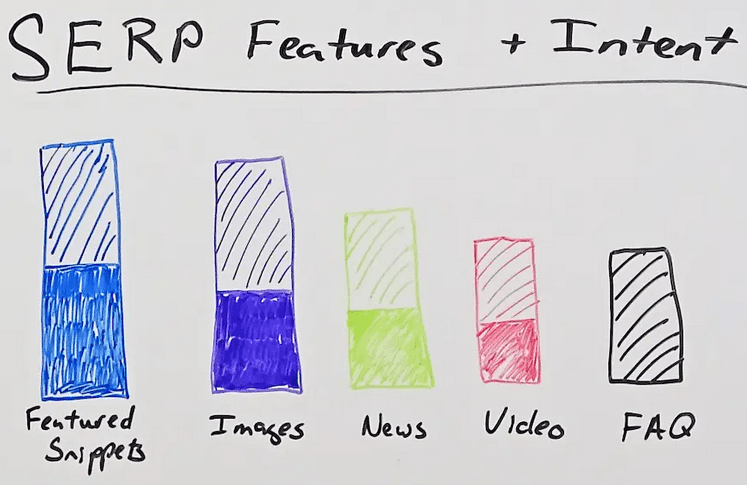
But my favorite part — and this is where the true power comes in, because it can inform your content strategy and this is where the SEO opportunities are actually at — is the analysis of SERP features and intent. Because what STAT will do is, out of the thousands of keywords that you put into it, it will analyze the entire SERP of each of those and it will collect all the SERP features that it finds and tell you exactly what you own and don’t own and where your opportunities are.
So let’s give an example that’s a little more concrete. So let’s say you track a bunch of keywords within a particular cohort and you see that most of the results have a featured snippet. STAT will show you exactly what you own and what you don’t own. Now what’s cool about this is you can click into what you don’t own and you can see the exact featured snippets that your competitors own that you can actually create some content strategy around and try and go steal those.
A different way is images or news. So let’s say that you notice that you’re selling TVs or something like that and almost all the SERPs have images and you don’t own any of them. So something like that can inform your content strategy, where you go to your team and you say, “Hey, folks, we need to create more images, or we need better structured data to get Google to show the images because this is the intent for this type of keyword, and we’re simply not owning it in this way.”
Same thing with news. If you notice a lot of news results and you’re not a news organization but you’re competing for these keywords, that can inform your content strategy and maybe you need to go after those news keywords or try something else. Video is another one. More and more SERPs have video results with video carousel and things like that. You can see exactly what you own and what you don’t own.
A lot of times you’re going to find that certain domains are beating you on those videos and that may inform, especially for the high volume keywords that you want to go after, you may want to be creating more video content for that. But it all depends on the SERP, and you’re going to find different feature sets and different combinations for every keyword cohort that you do.
So what’s important to you and what’s important to track it’s going to show up differently every time, but it’s going to show you exactly where the opportunities are. FAQs are another thing, rich snippets sort of results. You may find that your competitors are all using FAQ markup. You’re not using any. That could inform your SEO strategy, and you might start incorporating more FAQs because Google is obviously rewarding those in the SERPs and your competitors are gaining those and not you.
Other things, virtually any SERP feature that’s trackable. You can find local results. Twitter boxes. You may find that for certain queries Google is surfacing Twitter results and maybe that means you need to be on Twitter more than you actually are right now and see who’s ranking for those results instead of something that you’re doing on-site.
Maybe it’s you need to do more YouTube. It’s not all necessarily on your site. But this will tell you where you need to invest those opportunities. Review stars, podcasts, and more. All of this will tell you what’s important and where the opportunities are and where you’re winning and losing and the exact keywords that you can go after if you want to win and the exact feature sets where your competitors are getting traffic and you aren’t.
So I use STAT, I love it, every week. It’s a great tool. If you want to try it out, I encourage you to do so. That’s it for me. Thanks, everybody.
Cyrus Shepard is the founder of Zyppy SEO, an SEO consulting and software company. He writes/tweets about Google ranking signals, SEO best practices, experiments, tactics, and industry updates.