Because Meta owns Facebook and Instagram, these destinations have been able to grow their audiences quickly. Users login to Threads with their Instagram accounts and automatically follow the same people they follow on Instagram.
“We’re at about 10,000 right now. I would say a good 80% of that happened over the weekend,” said Paula Port, Destination Toronto‘s vice president of marketing. Visit Orlando has over 32,000 followers.
Instagram has over 1 billion monthly users worldwide, according to Insider Intelligence.
So far, posting activity on Threads by these groups is uneven. Some haven’t posted anything while others like Visit Orlando have been posting daily.
Threads doesn’t offer advertising at the moment, according to the Wall Street Journal. Facebook, Instagram, Pinterest and TikTok are the top spenders on social media advertising.
Destinations have been devoting fewer resources to Twitter. A new problem for Twitter has been the new blue check verification process, which requires a subscription. “We just kind of gone back and forth on what’s the value that we’re seeing there and it seems very unpredictable,” said Utah Office of Tourism Director of Marketing and Communication Ben Cook.
Destinations haven’t developed a strategy for marketing on Threads. Destination Toronto hasn’t posted much and is reusing the text-based strategy and repurposing content it uses for Twitter. Utah is experimenting with a more humorous voice.
“There is not a huge lift and we’re not going to put a lot of time into developing a huge strategy until we just sort of see where it goes,” said Cook. Audience engagement on the platform looks good so far, he said.
What strategies destinations come up with for Threads depends on the platform’s evolution.
“It feels like it wants to be Twitter, but everyone from Instagram is there,” Port said. “Is Threads going to reduce our need for that news-driven content or is it going to be more like Instagram, which is more curated and has more of a visual aesthetic?”
Who wins in a showdown between user-generated and brand-generated content? Below we dig into the benefits of both (and where influencer-generated content fits in).
Brands today need a high volume of high-quality content to reach social consumers.
But how much of that content should be user-generated vs brand-generated?
Good question! Increasing your social search presence and word-of-mouth means ramping up content production. Bonus points if those posts come from creators.
Chances are you’re producing content in-house side-by-side with sourcing UGC. Both are valuable types of content for brands but scaling either is easier said than done.
Below we dig into the debate of user-generated content vs. brand-generated content. We’ll also look at how influencer-generated content can be a scalable middle-ground.
Defining the Differences Between User-Generated Content vs. Branded Content
Although many marketers use these terms interchangeably, they are not the same.
Let’s quickly recap a couple of definitions and examples so we’re on the same page.
What is User-Generated Content?
User-generated content (UGC) is content published by customers promoting a product (or brand) that they love. These posts are unprompted and organic.
UGC has become a sort of catch-all phrase among marketers. The rise of UGC creators has made the definition of UGC even more confusing.
That said, “true” user-generated content is organic and created with no direct input from the brand being promoted. No compensation from the brand, either.
This is the key difference between user-generated content and both brand-generated and influencer-generated content. UGC can refer to everything from photos and videos to written content related to a product. This includes:
Product reviews and recommendations
Tutorials showcasing how products work and fit into daily routines
Stories where consumer share their personal experiences with a product
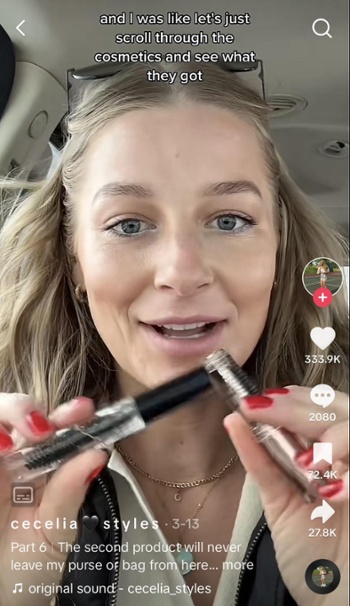
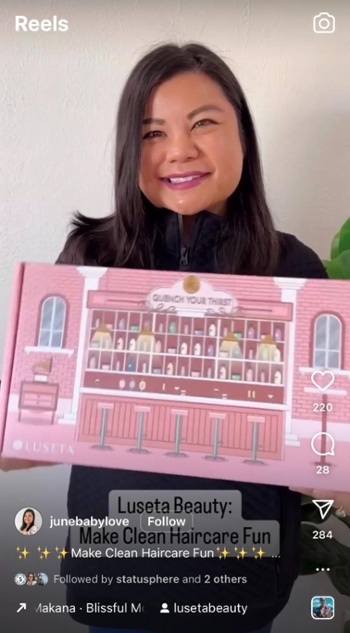
Short-form video formats like TikTok and Reels are the sources of most UGC today. Below is an example from a TikToker that went viral with a glowing review of a colour-changing lip balm she found at a dollar store.
Authentic and off-the-cuff, this post is a prime example of how unprompted content can be compelling. The video’s 330k “Likes” and 72k saves speak for themselves. Genuine excitement and enthusiasm are like lightning in a bottle from a marketing perspective.
The beauty of UGC is that it’s totally organic and produced by real customers — not marketers.
This also highlights the biggest challenge of leveraging and collecting UGC. The fact that user-generated content comes from customers organically means it’s unpredictable. This rings true in terms of its quality and the messaging conveyed by the customers.
However, this is exactly what makes a glowing user-generated post so valuable (and why consumers seek them out when researching brands).
What is Brand-Generated Content?
Brand-generated content is promotional content made by marketing teams (in-house or by agencies). Messaging and creatives are approved and coordinated by the brand.
In short, brand-generated content represents content that your marketing team puts out. These are posts that you control over when it comes to messaging, format and publishing frequency.
Brand-generated content represents a place to establish your brand’s voice, values and aesthetic. Most branded posts are created to raise awareness and keep customers in the loop.
Common examples of brand-generated posts include:
Announcements such as upcoming events, product launches and availability
Promotions, including time-sensitive offers and deals
Culture-centric content like behind-the-scenes videos showing off employee life
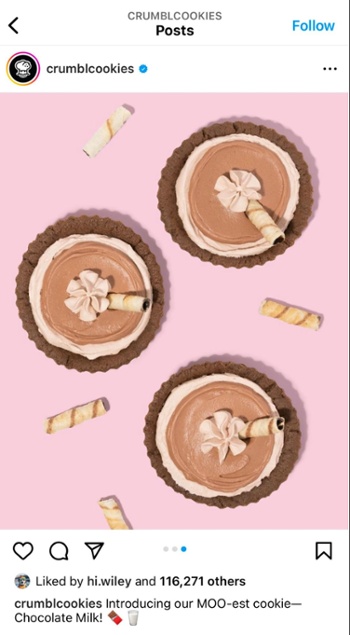
Below is a textbook example of a brand-generated post that builds hype for a new product.
Given that social media (and social search, in particular) is so massive for product discovery, brands are rightfully doubling-down on social content creation and distribution in-house.
Beyond scaling in-house, brands are also collecting user-generated content and sourcing posts from influencers. Doing so is key to keeping up with the TikTok and Instagram algorithms, not to mention the demand of social consumers looking for their next purchases.
The Effectiveness of User-Generated vs. Brand-Generated Content
User-Generated Content
Brand-Generated Content
More trustworthy and engaging than brand-generated content
Always authentic because it’s produced by real people (but quality varies)
Can be sourced on an ongoing basis (but requires permission to be repurposed and republished)
Offers brand control and conveys the exact message you want to say
Authenticity varies depending on the brand’s voice and creatives
Can be produced consistently (depending on your bandwidth) and is owned by your brand (no rights management required)
Important: it’s not a matter of either-or when it comes to both types of content for brands.
You’d be hard-pressed to find a brand that exclusively posts UGC. On the flip side, every successful consumer brand on social media features customers and creators in their content strategies. In short, brands need a combo of both.
Debating the effectiveness of user-generated content vs. brand-generated content also requires context. Both types of content for brands have distinct benefits which we break down below.
UGC is More Trustworthy Than Brand-Generated Content
When was the last time you bought something without reading a customer review first?
Chances are you probably can’t remember. Hey, neither can we!
The same goes for your target audience, though. Shoppers today rarely rely on brand messages alone when it comes to researching products.
On the flip side, consumers crave real feedback from real people. Makes sense. This is why it’s no surprise that UGC significantly lifts conversions when customers interact with it.
From customer photos and videos to reviews and beyond, user-generated content can supplement each and every phase of your marketing funnel. This explains why repurposing creator content is such a priority for brands today.
User-Generated Content is Always Authentic
Relatable, unfiltered content helps potential buyers imagine a product in their own hands.
Fact: 88% of consumers trust recommendations from people they know above any marketing channel This explains why micro-influencers are so effective when it comes to establishing trust.
Authentic creators with smaller followings feel more like friends or family versus a celebrity. This phenomenon also explains why brands are turning to UGC creators to make promotional content that feels organic.
User-Generated Content Can Be Sourced Long-Term
When there’s a high volume of happy customers posting about your brand, more people will follow suit. Done right, this creates a snowball effect that yields UGC long-term.
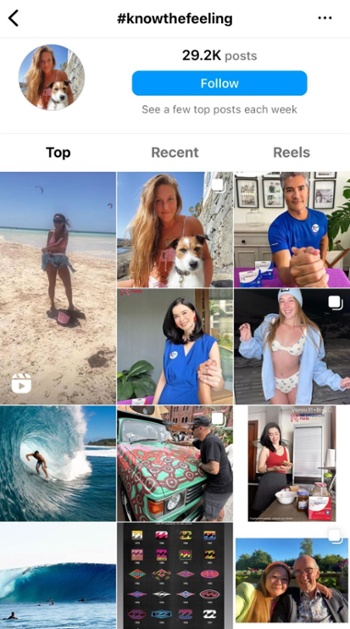
Brands with an established branded hashtag can do this organically. The more satisfied customers that tag your brand, the bigger your library of UGC becomes. Below is an example of Billabong’s #KnowTheFeeling tag which has earned over 29k pieces of UGC.
On that note, creating thousands of pieces of content in-house isn’t realistic (or even possible). Achieving such a high volume of content means leaning on creators and customers to spread the word.
Brand-Generated Content is Yours (With No Strings Attached)
This is a big one.
The benefits of user-generated content over brand-generated content when it comes to authenticity and trust are clear. That said, the housekeeping required with both sourcing and promoting UGC often flies under the radar.
Specifically, user-generated content can be a time-sink when it comes to rights management. This includes reaching out to creators to get explicit permission to republish posts.
With branded content, all of the above is a non-issue because you own your posts full-stop.
Brand-Generated Content Lets Brands Say Exactly What They Want to Say
The unfiltered nature of user-generated content is what makes it so powerful. Creators’ off-the-cuff delivery and unique style really resonate with consumers.
That said, organic UGC usually isn’t necessarily ad-worthy (or even marketing-ready).
Not every satisfied customer is going to align with your brand. Heck, some customers might get details about your products wrong. They might show off your product but never mention your brand by name or explain where followers can find it in-store or online.
But hey, you can’t blame them! Customers aren’t employees.
Branded content created in-house puts you in total control to highlight key benefits and emphasize the specific details of the products that you need.
Brand-Generated Content Can Be Produced Consistently
The inconsistency of UGC isn’t solely limited to quality.
Brand-generated content can be anticipated when it comes to scheduling and publishing frequency. Likewise, your in-house content can align perfectly with launches and promotions.
On the other hand, user-generated content is more sporadic and random.
Organic posts don’t always align with what you’re currently promoting. For example, you can’t source organic user-generated content for a product launch until after the product is released.
Although the value of UGC can’t be denied, it isn’t always consistent in terms of quantity or quality. With branded content, you know exactly what you’re going to get.
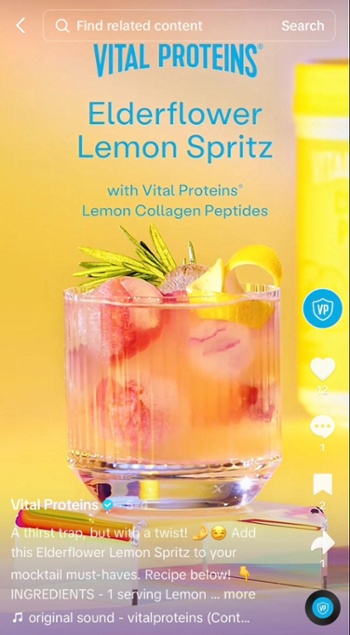
In-house content is also reliable and consistent when it comes to meeting your brand’s standards. For example, this post from Vital Proteins is aesthetically pleasing, professionally produced and conveys the brand’s vibe.
These types of posts are necessary for both establishing your brand and keeping followers in the loop about your products.
How Influencer-Generated Content Gives Brands the Best of Both Worlds
When it comes to user-generated vs brand-generated content, there’s a sort of tug-of-war between authenticity and control.
But consider how brands can find a balance between both via influencer-generated content.
Influencer-generated content refers to posts produced by content creators with creative input from brands (in exchange for compensation).
Done right, posts from influencers feel like organic UGC. This is especially true for brands that partner with micro-influencers that publish relatable, authentic content.
Food for thought: 71% of consumers prefer to discover products through consumer content versus branded ad channels. Although influencer-generated content is brand-directed, it’s not brand-generated. Influencer posts retain their authenticity as a result.
That’s why savvy brands are prioritizing influencer collaborations to create content that looks organic but still aligns with their specific marketing goals.
In short, influencer content bridges the gap between UGC and in-house content. Brands can get their desired messages across while benefiting from creators’ authenticity and personality.
Shoppers trust opinions and seek out the content of authentic creators they can relate to. Unlike organic user-generated content, influencer content offers brands a say in what’s published.
While UGC ticks the boxes of authenticity, most organic UGC isn’t exactly ad-ready. Most brand-generated content is marketing-ready but lacks reliability or personality.
Influencer-generated content is a happy medium between the two as brands provide direction but empower influencers to take the reins when it comes to creativity and delivery.
Brands running creator campaigns in-house are tasked with sharing influencer briefs that balance creative freedom and brand messaging. This process requires keen attention to detail and is exhausting if you plan on running long-term, always-on influencer campaigns.
With Statusphere’s platform, brands can actually streamline and optimize the briefing process without sharing directions themselves. Our creators are vetted and matched with products based on 250+ first-party data points based on brief brand input.
This means that creators are only matched with products they actively want to promote. Stronger matches mean that creators have a stronger pulse on what to say, what to post and which types of content will resonate most with their audiences.
Influencer Content is Scalable (with the Right Platform)
Relying solely on organic UGC is a challenge when there are so many question marks regarding both volume and quality. Meanwhile, scaling content in-house can only take brands so far when competitors are earning hundreds or thousands of posts per month from creators.
That’s yet again where influencer marketing campaigns can pick up the slack.
Working with a high volume of micro-influencers long-term offers an actionable way for brands to scale content production without sacrificing quality. Making this happen means using an influencer platform like Statusphere that generates a guaranteed number of posts for brands.
Influencer-Generated Content Boosts Paid Social Performance
The value of influencer-generated content extends far beyond your social feed.
For example, consider how brands are transforming their top-performing influencer posts through whitelisting (AKA “allowlisting”) on TikTok and Instagram.
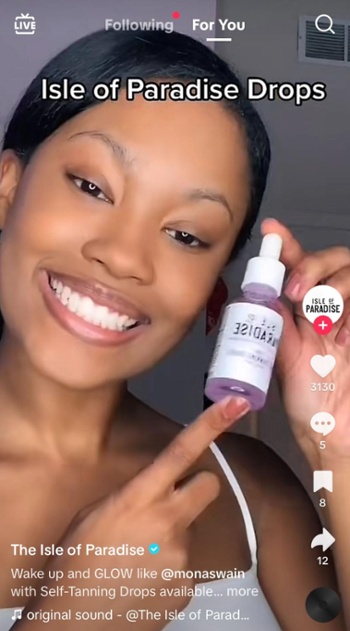
Check out the Spark Ad on TikTok from Isle of Paradise below. This ad campaign earned 45+ million views in total, not to mention a 68% boost in weekly paid revenue (versus the previous nine weeks of their campaign).
Note: having content rights built into your influencer platform means you can use your creator content in ads without any manual outreach or back-and-forth.
How to Earn Influencer-Generated Content at Scale
Shoppers crave honest recommendations from people they trust. Simple as.
That’s why creator content is a goldmine for marketers.
Sourcing organic user-generated content and creating thoughtful brand-generated content are both important for brands today.
Meanwhile, ongoing influencer-generated content keeps your brand visible in social search and likewise means more potential for marketing-ready content you can promote elsewhere.
If you need a scalable way to earn authentic branded content, Statusphere’s platform can help.
Our micro-influencer software matches brands with vetted influencers from our creator community. Unlike other platforms, we can guarantee a specific volume of content for brands.
Statusphere eliminates the most time-consuming pieces of running an influencer campaign in-house thanks to our advanced matchmaking and fulfillment technology. We’ve already generated 75,000+ pieces of content on behalf of 400+ consumer brands.
Want to see how our platform works? Get in touch with one of our experts to learn how we can optimize your brand’s marketing efforts with guaranteed content at scale.
How do you make money in the emerging creator economy? Who better to answer this question than street-level entrepreneurs who were on duty working the show floor and environs on June 22 at Vidcon, fan convention for creators and influencers held annually in Anaheim, Calif.
If you’re going to hawk a product or service all day at a convention, you’d better master the 60-second pitch. The seven street-level entrepreneurs who spoke to Variety‘s for this week’s “Strictly Business” podcast offered insights into where the opportunity is and where the market is heading for creators and influencers who aim to ply their trade largely virtually via social, streaming and e-commerce platforms. The companies represented are involved in distribution, technology and visual effects, e-commerce, marketing and promotion and matchmaking between brands and influencers.
Here’s a sampling of observations:
From Annette Lapham, head of marketing for DeepMotion 3D animation firm, on the use of AI in content creation.
“We see it as a tool. People can use it as a tool. Even animators, we work directly with animators, and they use it as a tool to really cut out a lot of that hard work that can now focus on the elements of their craft that can involve like polishing and making things really refined. But as to where we’re going with generative AI, we’re about to announce a new product of ours, generative AI animation. And so we think about how easy it would be to do just input text alone, and create animation. That’s kind of the direction where we’re going,” she said.
From Nathn, growth marketing manager for MyShop, an e-commerce platform owned by China’s DHgate.
“This is what we call social commerce. And right now, the three main problems is like the link sharing is an organizational nightmare. The payments, usually every platform pays the same and it’s kind of hard. And also the art of choosing the next product you’re going to talk about, it’s usually a guess work. We want to help you. We have like AI technology that will analyse content from platforms in Asia, from Tik Tok, etc. And we give you recommended trends depending on your niche. So if you’re a makeup creator, we’ll give you some makeup tools that are viral in Asia or viral over regions of the world that you should maybe consider checking and making content about,” he said.
From Jeff Ruby, head of sales for StreamYard, a stream-hosting platform that makes it easier for creators to incorporate professional touches into their feeds.
“The likes of streamyard, some of these other platforms that allow, because we’re not we’re not competing with the YouTubes and the Twitch of the world. You’re using our platform, so it looks more professional when you’re producing your content on those platforms. Right. So I think it’s a differentiator, right? I could be in my basement with a phone or I could be having very high quality video with my branding, call to actions, brand deals, things like that,” he said.”
From Mike Diaz, long-time staffer at the Mogul Moves merchandise company run by prominent YouTuber Lugwig Ahgren.
“We were thinking about the idea of adding on more clients and what that looked like. And I think we ultimately decided that the scale-up to have a company that’s profitable and that is just making merch for other people is only really profitable in a meaningful way at a very high number, which is what we didn’t want to do. So this is more of like, we make more boutique-esque like cut-and-sew items for a small number of creators now. So that’s what we do.”
Navigating the digital landscape, you’ve probably heard of the term ‘social selling.’
But what does it actually mean? And how can it turbocharge your business?
Well, think of it as the ultimate modern sales technique, leveraging your social networks to build relationships and close deals.
From reaching out to prospects on LinkedIn to leveraging customer testimonials on Facebook, there are many ways to win at this game.
So, ready to turn your social media prowess into sales power?
Let’s jump in.
What is Social Selling?
Social selling isn’t just another marketing jargon. It’s an evolved sales methodology designed to function seamlessly in the digital era.
Harnessing the power of social media platforms, it’s about finding and interacting with potential customers in their natural online habitat.
Let’s delve deeper into this concept…
Imagine you’re at a networking event. Instead of bombarding strangers with your sales pitch, you opt for a softer approach.
You mingle, listen, provide valuable input, and slowly develop relationships.
Social selling is similar, only it takes place on the virtual corridors of LinkedIn, Facebook, Twitter, and other social platforms.
But it isn’t a process of randomly approaching anyone online.
It involves strategic listening, observing potential clients’ online activity, understanding their needs, and then initiating conversations that provide value.
For instance, you might come across a LinkedIn post by a potential client who’s facing challenges your product can solve.
Instead of directly pitching your product, you could share a helpful article addressing those issues, subtly showcasing your solution.
In essence, social selling moves away from the era of cold calling and unsolicited emails, enabling you to engage in more fruitful and less anxiety-inducing sales conversations with interested buyers.
Why is Social Selling Important?
Now, you might be thinking, “Okay, so social selling involves using social media. But why should I bother?”
Well, here are a few benefits that might change your mind:
Improved lead generation: With social selling, you’re not just throwing darts in the dark. You’re able to target audiences that are already interested in what you’re offering. Hence, you can improve the quality of your leads.
Enhanced customer relationships: Social selling isn’t just about the sale; it’s about building relationships. You’re engaging with potential clients on a platform they’re comfortable with, leading to better connections and trust.
Increased sales: With improved leads and better relationships, it’s no surprise that social selling can boost your sales. According to LinkedIn’s social selling index, sales reps who leverage social selling tools are 51% more likely to exceed their quotas.
With these benefits in mind, let’s transition into some top tips and strategies to help you unlock your social selling potential.
11 Top Social Selling Tips That’ll Skyrocket Your Sales
If you’re set on embracing the world of social selling, you’ll need more than a basic understanding.
Here’s where best practices come in — consider them your survival kit in the vast digital jungle of social selling…
1. Leverage LinkedIn Sales Navigator
LinkedIn Sales Navigator is not just a tool — it’s a treasure chest filled with nuggets of invaluable customer insights.
This advanced LinkedIn tool is designed to help you find the right prospects, understand their needs, and engage them with personalized outreach.
For instance, with its lead and company search feature, you can filter by job role, company size, and industry, among others, to find your ideal customers.
Moreover, it provides real-time updates about your prospects, such as job changes and shared posts, giving you a reason to engage.
Remember, sales pitches are out; insightful, personalized engagement is in.
So use these insights to approach potential customers with something valuable to them, increasing your chances of striking up a meaningful conversation.
2. Engage in Social Listening
Social listening goes beyond merely monitoring your social media mentions. It involves analysing the conversations and trends happening not just around your brand, but your industry as a whole.
For example, you might notice a rising trend or common pain point among your customers.
By addressing these in your interactions or content, you show prospects that you understand and care about their needs, making your brand more attractive.
So, make it a daily habit to listen in on the buzz, then respond strategically, placing your brand right at the heart of the conversation.
3. Promote Employee Advocacy
Your team members are not just employees; they’re your secret brand ambassadors waiting to be activated.
When they share your company’s content, they help humanize your brand and extend your reach into their diverse social networks.
For instance, a software engineer sharing a company blog post about a new feature they developed not only promotes your product but also showcases the brains behind your operations.
This type of content adds a personal touch, which can resonate with customers and build trust in your brand.
Remember, people connect with people, so fostering employee advocacy can be a huge win for your social selling efforts.
But it’s not about picking any influencer; it’s about choosing the right one who aligns with your brand and can add value to your audience.
For example, if you’re a fitness equipment company, partnering with a respected fitness coach on Instagram can help your products get in front of the right eyes.
The influencer could share workout videos using your equipment, providing value to their followers while showcasing your products.
Thus, the key to successful influencer partnerships is finding those whose values align with yours, whose audience matches your target customers, and who can showcase your products or services in a way that adds value to their followers.
5. Prioritize Content Marketing
The value of high-quality, relevant content can’t be overstated. Effective content marketing isn’t about overt promotion; it’s about establishing yourself as a trusted thought leader within your industry.
This means sharing articles, infographics, and videos that not only pique the interest of potential buyers but also provide them with actionable insights.
For instance, if you’re in the SaaS industry, share tips on maximizing software productivity or post a how-to video for a common software problem.
By consistently offering valuable content, you attract potential customers, facilitate meaningful sales conversations, and organically boost your brand reputation.
6. Track Social Selling Statistics
While instinct plays a part in social selling, it should never be your primary decision-making tool.
Use social media analytics to track your efforts and understand which strategies work and which don’t.
For example, measure engagement rates to understand what content resonates with your audience or track conversion rates to see which tactics drive sales.
Adjust your approach based on data, not just gut feelings.
This constant analysis and adjustment make your efforts more targeted, increasing the efficacy of your social selling strategy.
7. Utilize a Variety of Social Platforms
One size doesn’t fit all when it comes to social selling.
Each platform has its unique demographic and engagement style, and your approach should reflect that.
LinkedIn, with its professional focus, is perfect for B2B outreach and networking, while Facebook and Instagram might be better suited for B2C and lifestyle brands.
Twitter, with its concise, real-time communication, is ideal for industry news and quick updates.
Be sure to optimize your messaging to align with the platform. A diversified presence allows you to reach a broader audience and tap into the unique opportunities each platform provides.
8. Focus on Building Relationships
Social selling is more about cultivating relationships than making a quick sale. It’s a long-term strategy, not a quick fix.
Engage with your followers by responding to their comments, answering their queries, and even participating in discussions on their posts when relevant.
For instance, if a potential client posts a question about industry trends, provide an insightful response or link to a helpful article.
This type of engagement builds a relationship based on trust and respect, positioning you as a go-to resource. This rapport will naturally lead to sales conversions over time.
Remember, in social selling, relationships are the soil from which sales grow.
9. Personalize Your Outreach
You’ve likely been on the receiving end of a generic sales message before — it’s about as thrilling as watching paint dry, right?
So, to truly engage with your potential customers, make sure your outreach efforts are personalized.
Study their profiles, understand their interests, and reflect on their needs. By doing this, you can tailor your messages to resonate with them on a deeper level.
For example, if you see a potential customer post about sustainability efforts in their industry, don’t just send them a message about your product. Instead, talk about how your product aligns with their sustainability goals.
By personalizing your messages in this way, you’re showing that you genuinely understand and care about their needs, which will in turn build trust and connection.
10. Stay Consistent with Posting
Consistency is the backbone of any successful social media strategy. Just as your favourite TV show has a consistent airing schedule, your social media accounts should also follow a regular posting pattern.
This keeps your brand fresh in the minds of your followers and demonstrates your dedication to engaging with them.
Establish a content calendar to keep track of what you’re posting and when.
Plus, regularly updating your social media accounts may help improve your SEO rankings, which leads to greater visibility online.
11. Always Provide Value
Social selling isn’t a one-way street; it’s about fostering a beneficial relationship between you and your audience.
This means ensuring that every interaction — be it a blog post, an insightful comment, or a helpful tip — provides value to your audience.
Think of your social media platforms as a resource hub for your followers.
Sharing helpful tips, industry insights, and useful resources not only educates your audience but also positions you as a thought leader in your industry.
For example, if you’re in the software business, regularly sharing tips on maximizing software efficiency or guides on choosing the right software can be incredibly valuable for your audience.
Embracing the Future with Social Selling
Perhaps you’re sitting there, a tad overwhelmed…
We get it.
But remember, it’s not just about selling — it’s about building relationships and connecting in meaningful ways.
You’ve got the tools, you’ve got the know-how, and now, you’ve got the insights from this definitive guide.
So, it’s time to take the reins, harness the power of your social networks, and skyrocket your sales.
The world of social selling is your oyster — go out there and make some pearls!
Sam is an Associate Editor for Smart Blogger and family man who loves to write. When he’s not goofing around with his kids, he’s honing his craft to provide lasting value to anyone who cares to listen.
Pinterest has a lot to offer both beginner and experienced photographers. Here’s how you can make the most of this undercover social media site.
Pinterest is a network where many people seek inspiration for their own creative ideas, and it’s also a spot where those with an open mindset can successfully promote their photography skills.
Whether you work with clients or create your own products (or both), you’ve got plenty of opportunities to use Pinterest effectively. In this guide, you will discover seven possible things you can try when using the platform.
1. Finding Inspiration From Other Photographers
If you’ve ever used Pinterest in a smaller capacity before, it was probably to find inspiration. It’s a great place to look for ideas related to travel, food, lifestyle, and much more. And whether you’re a beginner to photography or a seasoned professional, Pinterest can help you advance your skills even further.
When using Pinterest, you can find inspiration from other photographers in your field. For example, you can look for new locations to capture in your local area or potential ways to place items in a photoshoot if you want to improve your product photography.
Pinterest is also useful if you want to look at new aesthetics to adjust your editing style. You can then advance your editing skills in Lightroom once you’ve saved some ideas.
2. Learning More About Photography as a Craft
Finding inspiration from other photographers is one way to get better at your craft, but it’s not necessarily the most efficient way to do so. For many people, the best way to become a better street photographer (or excel in any genre, for that matter) is to absorb information and put it into action.
Pinterest might not be the first place that comes to mind when thinking about where you can learn more about photography. However, it’s an excellent place to find practical resources, such as blog posts, YouTube videos, and podcast episodes.
Many creators publish pins of what they share elsewhere on Pinterest, and you’ll also find the outbound link here. You can use the search bar on Pinterest to find topics (such as “photography tips”). When you see something that you want to refer to later, save it as a pin within a mood board.
If you enjoy using Pinterest, and your favourite browser is Firefox, consider trying these Pinterest add-ons for Firefox.
3. Drive Bookings for Photoshoots
For many photographers, photoshoots are a popular income stream. In addition to being skilled at your craft, you also need to market your services to your target audience. Social media in general is ideal for doing that, and Pinterest can help you get your work in front of others who may wish to do business with you.
When using Pinterest as a photographer, you can share your best work in separate pins. To bring all of these together, consider creating a board that others can access. Each time you share a pin that includes a portfolio piece, you can provide a brief description of what you do. If a user likes what they see, they can click on the link you include and book a shoot directly with you.
If you use pins for photoshoot bookings, it’s worth mentioning the locations you’re willing to work in. Giving others an idea of where you’re based is also wise.
Although many photographers begin their careers with client work, running a business has the beauty of opening your eyes to plenty of other income-generating opportunities. It’s not uncommon for experienced photographers to launch their own products later on, including selling prints and photography books.
When promoting your photography services, you’ll need to build awareness around the products in your store if you want to maximize your earning potential. Pinterest is a handy place for doing precisely that.
To help promote products from your online store, you should think about what the end result is for the buyer. For example, if you create and sell Lightroom presets, showcase what a picture looks like before and after applying it. Similarly, if you sell prints, you can show how the photo looks when it appears on someone’s wall
5. Finding Other Local Photographers
Although many people have a camera on their smartphone these days, being truly passionate about photography—to the point of learning more about the craft—is a lot more rare. As a result, you may find your life as a photographer quite lonely if you don’t make an effort to meet like-minded people.
There are many ways that social media brings people together, and one of its greatest benefits is that you can find people living near you with related interests. If you’re looking for other photographers, you can use Pinterest in a similar way to Instagram by typing your location followed by “photographer” in the search bar.
When you see a photographer that interests you, you can send them a message on Pinterest. Alternatively, see if they have any other social media accounts and contact them on those.
6. Asking Clients to Find Photoshoot Styles That Interest Them
Like selling a service in any other business, it’s essential that you understand what your client wants from a photoshoot. The best way to do this is by asking in advance—or even better, asking your client to provide examples of what they’re looking for.
You can tell clients to create a board with different ideas on Pinterest, and once they’ve done this, they can provide you with the link. Alternatively, you can create a board of ideas you’ve got and send your proposals to see if the other party is happy.
When creating boards for this phase, you can always make them private if you want. You can find out how to use secret boards on Pinterest in a separate guide.
7. Promoting Pins via Advertising
Like many other social media networks, Pinterest offers an avenue for paid advertising if you want to get in front of more people. Of course, you’ll need a budget to use Pinterest advertising—but once you’re established, you may find that this is a useful option for getting in front of more users.
When advertising on Pinterest, make sure you understand who you’re trying to reach with your photography. Moreover, you should set a clear limit on how much you’re willing to spend in advance.
Pinterest: A Powerful Platform for Photographers
Pinterest has several uses for photographers, and it can help both those who work with clients and photographers who sell products. Even if you’re only in your early days as a photographer, you can find significant value in using Pinterest to discover different photography styles and resources.
Now that you’ve read this guide, you should have a better idea of how you can make the most out of this still-underrated social media platform. Why not experiment with each of these tips?
Danny specializes in writing about productivity and also enjoys exploring different creative disciplines, especially photography. He has a degree in Sports Journalism and has been writing professionally since 2016.
We hear a lot about influencers in marketing circles today. It’s a relatively new term, but the concept is not a new one. When mass media advertising was king, brands used the term “endorsement.” The trend skyrocketed in the 1980s, leading to sports celebrities like Michael Jordan, Tiger Woods, Serena Williams and Cristiano Ronaldo, who reportedly earned more money from endorsements than from athletics.
The word “influencer” arose in the early 2000s along with the rise of reality shows like The Bachelor, Big Brother and especially Keeping Up with the Kardashians. Then came the great leveller, social media, where user-generated content transformed some everyday content creators into influencers in their own right.
Distinguishing Between Content Creators And Influencers
It’s become important to distinguish between content creators and influencers in our current social media landscape. Today, influencers typically focus on compensation from the brands they promote, whereas content creators engage in labors of love. Content creators produce their work because they’re passionate about self-expression. Brands may approach them with unsolicited sponsorship offers, but compensation isn’t their top priority.
I believe this distinction explains the backlash arising toward influencer marketing. Increasingly, social media users are demanding authenticity in content marketing while denouncing sponsored content.
From a hard-nosed business perspective, social media platforms produce audiences to sell to advertisers. They view content as the raw material that drives their audience-manufacturing processes. Media outlets have always chosen content that appeals to their sponsors’ targeted demographic. However, there’s a fine line between content that attracts an audience and content created to exploit it.
The difference has to do with intent. Social media audiences trust passionate content creators who have a sincere desire to share experiences. They also tend to shun those influencers they deem to be in it for the money.
Authenticity Outweighs Production Values On Social Media
Content that is raw, unfiltered and even amateurish can easily go viral if it has something genuine and heartfelt to say. That’s why industry watchers see video as the future of content marketing. It’s harder to be insincere on video, and video imagery is more difficult (although not impossible) to fake.
Raw footage uploaded straight from a smartphone has a distinctive authenticity. For example, heavily doctored videos depicting pristine tourist destinations lower trust, while unadulterated footage of locations in their natural state can inspire confidence. Recruiting paid influencers may work for massive, multinational brands, but I would argue that neighborhood businesses should focus their social media marketing on attracting authentic content creators.
For example, local restaurants tend to benefit far more from sincere online reviews from paying customers than from “internet-famous” influencers. Customer-generated videos capturing a restaurant’s ambiance may be the most trustworthy marketing content available today.
Case Study: Frankensons
Recently, Joseph Labour of the Today Show reported on an encounter between a local Las Vegas pizzeria, Frankensons, and an up-and-coming TikToker named Keith Lee. Without informing Frank Steele, Frankensons’ owner, an employee of the struggling restaurant emailed Lee, inviting him to sample the fare.
Lee received no compensation for his onsite video review, and paid for all the food he sampled, leaving him out of pocket by $86.73. He gave the venue a sincere, positive review, specifically recommending the lemon pepper wings and the garlic knots.
Only hours after Lee’s video review went live, Frankensons had a new lease on life. The TikToker’s review drew over 31 million views in its first week.
“Our phone never stopped ringing,” Steele told the Today Show. “I’ve sold more lemon pepper wings in the last two days than I have in the past four months. I made more garlic knots yesterday and the day before than I’ve ever made.”
This is just one example of the impact sincere video reviews from objective content creators can deliver to local restaurateurs. Lee’s unpaid recommendation did more for Frankensons’ traffic than any paid advertising could ever have achieved.
I believe content creators are the future for business promotion. Online customer videos can lift establishments above the deluge of questionable and ineffective reviews swamping the internet. To succeed, businesses should focus on finding ways to attract authentic content creators to their locations. It costs nothing, and the results can be priceless.
According to recent reports, a leaked marketing clip has provided a sneak peek into Instagram’s rumoured text-based app that could compete with Twitter.
According to recent reports, a leaked marketing clip has provided a sneak peek into Instagram’s rumoured text-based app that could potentially compete with Twitter. The app, which has been codenamed P92 or Barcelona, is referred to as “Instagram’s new text-based app for conversations” in the slide, according to The Verge report.
Users will have the convenience of signing in to the app with their existing Instagram username and password. Furthermore, their followers, handle, bio, and verification will seamlessly transfer over from the main Instagram app, the report said. The leaked marketing slides reveal that the new app resembles a combination of Instagram and Twitter, featuring a feed where users can make text posts up to 500 characters long, complete with attached links, photos, and videos.
Is Instagram planning to enter the Twitter arena?
According to the reports, Meta, the parent company of Instagram, seems to prioritise moderation controls from the outset. The leaked marketing slide mentions that users will have settings to manage who can reply to their posts and mention their accounts. It also suggests that any accounts blocked on Instagram will carry over to this new text-based app.
In an intriguing move, the app will also introduce an element of decentralisation. The slide indicates that compatibility with certain other apps like Mastodon is in the works, allowing users from these apps to search for, follow, and interact with profiles and content on the Instagram text app. This compatibility is likely to be achieved through ActivityPub, a protocol explored by Meta and other technology companies.
Should the app be widely released, it could further solidify Instagram’s popularity as a social media platform. As Twitter faces ongoing challenges, many users are actively seeking alternative platforms to share tweet-like updates. Instagram’s potential entry into this space could present a compelling option for those seeking a new online destination.
While the leaked marketing clip has generated excitement, official confirmation and further details from Instagram or Meta are still awaited, leaving users and industry observers eager for official announcements.
Era-defining publishers (first Buzzfeed, then Vice) on the rocks; social giants sweating over TikTok; rapid cultural changes. The 00s version of the internet finally feels like it’s slipping away. But is it – and what comes next? We asked leaders from The Drum Network.
Alistair Robertson, creative partner, Nucco: “Search will change more in the next 18 months than it has since the noughties began. That will affect the broader digital ecosystem.
“AI-delivered information will soon take centre-stage on search pages, meaning far less real estate for anything other than a very small (and valuable) brand and product set. For consumers, this could be positive, for smaller brands, probably less so.
“These search changes will materially affect the amount of marketing content created. Branded content will no longer be needed at such high volume to channel consumers through a sales journey. Those changes will affect digital advertising’s opportunity to do a job. AI could yet be the killer of the humble banner.
“There’s much changing, and consumers will be the big winners. For brands, perhaps the latter 2020s will be about sponsorships and, dare I say it, quality creative ideas that people want to watch and share!”
Charlie Wade, global executive director of growth and innovation, VMLY&R Commerce: “The internet is constantly evolving. It started as a broadcast ‘message board’, before moving to content sharing, from music to photos. Now, web3 and AI have ushered in an age of decentralization, giving people the power to reimagine worlds, songs, and even the Pope.
“The internet is lauded for the disruption it has fostered: critics have receded in the face of consumer reviews; mass media usurped by social. While this initially brought immediacy and a widening aperture of information, the downside has been an erosion of authenticity, which the decline of legitimate publishers could compound. From fake sneakers to fake news, the ubiquity and the relative ease with which nefarious actors can spread misinformation is real. Those who control platforms (Musk or the masses) must imbue protocols around what is being positioned as authentic.
“Reader habits have morphed, placing stress on revenue models: sponsored editorials and mass advertising wilted, so companies needed new income sources, such as e-commerce integration. Marketers should think about the internet as episodic, with each stage impacted by user needs and technological developments. The 00s era is over. Its replacement offers both opportunities and challenges for brands.”
Matt Belanger, vice-president, director, digital communications strategy, Momentum Worldwide: “The (current) digital revolution comes amid a heightened desire for authenticity and realness. With technological advancement comes knowledge and experience as more people become seasoned social media users. The skill of spotting clickbait, ads, and content that doesn’t add value to our lives has sharpened to the point of skipping right past without a thought.
“As we see media companies who focused traditionally on selling advertising as their source of revenue start to fall, it signifies an opportunity for marketers to guide these shifts. Content creators stand out because they are the voice of authentic human beings, gaining trust (and sometimes financial support) from their communities. Providing authentic value is key to standing out, whether that’s an opinion, education, or just entertainment.
“We’re hopeful for the future. If we take great care to create quality, relevant content, consumers will flock to it.”
Nina Goli, digital strategy director, Radley Yeldar: “The internet of the 00s is not dead. It defined the era of the profile and laid the foundation for future developments. Societal dependence on the internet became more evident in the 2010s, bringing forth toxic aspects of web addiction.
“As we progress further into the 2020s, we’re witnessing a resurgence of omni-web experiences with a nostalgic twist. Challenges arising from regulators and a ‘big brother’ mentality present organic opportunities for marketers and publishers to redefine authenticity and credibility in online relationships with audiences.
“In addition to emerging technologies like influencer marketing, user-generated content, AR, and AI, publishers should tap into the gap that exists: a need to reintroduce the human aspect of digital communication. This human touch was instrumental in forging strong bonds with millennials during the early 00s and is now being reclaimed by Gen Z. While challenges persist, there is hope that innovation and adaptation will lead to an improved digital landscape, but we should prepare for further disruptions and adjust our strategies accordingly.”
Danielle Dullaghan, social strategist, Social Chain: “We have to learn from the mistakes of social publishers. Relying on platform functionality for your business model is not possible in an ever-changing landscape. Today, there’s power in TikTok; tomorrow it could be something completely different. Social publishers built their business off Facebook link clicks and video formats, and when Meta pivoted their algorithm, publishers were left in the dust.
“00s internet is not dead, but used in different ways. Facebook favors meaningful engagement; groups and marketplace are absolutely thriving. But social publishers are struggling to organically monetize on a platform that has changed their business model so drastically.”
Dan Bermingham-Shaw, senior digital PR consultant, BuiltVisible: “The new internet age requires fluid, transformative change. Big institutions like the NYT and BBC have kept up by adapting and creating diversified digital businesses, while smaller, punchier companies have done important, valuable work but failed to retain momentum and adjust to new demands.
“Those lessons in failure help push others to improve and create platforms suited to our needs; the successful publishers of tomorrow will be able to incorporate audience convenience in as flexible a way as possible, making use of tools like AI to capture audience minds and interests. The internet is always moving and there will be many more crumbling publishers in the future, but they will fall in order to build something better and more suited to what audiences demand. We loved Vine, but TikTok took the concept and doubled it with huge success. It’s a pattern we’ll continue to see.”
James Crooke, chief technology officer, Rawnet: “Web 2.0 (The 00s version) is far from dead. It remains highly relevant for brands in today’s digital landscape. It has revolutionized brand engagement through interactive and collaborative user experiences, along with social networking and user-generated content.
“Despite challenges faced by publishers such as cookie consent, ad-blocking, and the shift towards closed ecosystems (Facebook, Instagram, Twitter, Netflix, Twitch, YouTube, etc.), web 2.0 technologies continue to evolve, offering new opportunities for personalized experiences and improved customer interactions. To thrive in the uncertain future of the internet, brands must remain agile and adaptable, aligning themselves with evolving audience needs and expectations, allowing them to connect with customers and build strong relationships.”
Feature Image Credit: Alexander Andrews via Unsplash
Are you a small business owner looking for ways to use inbound marketing to stand out from the competition and grow your small business? Inbound marketing or organic marketing is a great way to build brand recognition and grow your small business. It is also a more cost-effective and time-efficient approach than traditional marketing methods.
In this blog post, we will discuss 7 ways to use inbound marketing to grow your small business.
Inbound marketing is all about creating content that draws people in. It involves creating content that is relevant to your target audience and providing them with valuable information. It is also important to be creative and think outside the box.
You need to create content that will grab people’s attention and make them want to learn more about your business. With the right strategy, you can use inbound marketing to reach more people and grow your small business.
What is inbound marketing?
As a small business owner, you may be wondering what inbound or organic marketing is and how it can help your business. Inbound marketing is a type of marketing that focuses on attracting customers organically through digital channels such as search engines, social media, and blogs.
Unlike outbound marketing, which involves interrupting potential customers with ads, inbound marketing uses content to draw customers in and build trust.
Once you have a customer’s attention, you can then slowly nurture them through the sales funnel until they become a paying customer.
Inbound marketing is an extremely effective way to market your small business, and it’s a great way to build long-term relationships with your customers. Keep reading to learn more about inbound marketing and how you can use it to grow your small business!
Are you a small business owner who wants to learn more about inbound marketing? If so, you’re in the right place! In this blog post, we’ll share seven ways you can use inbound marketing to grow your small business.
1. Create SEO-Friendly Content 2. Create Targeted Landing Pages 3. Use Email Marketing 4. Use Social Media 5. Use Lead Magnets 6. Use Retargeting 7. Use Analytical Tools
Create SEO-Friendly Content
SEO-friendly content is content that is optimized to reach and rank high in search engine results. In order to improve your website’s visibility in search engine results, you need to create SEO-friendly content. This means creating content that is optimized for search engine algorithms and contains relevant keywords.
This type of content can help you improve your website’s ranking and drive more organic traffic to your website. When you create content, you should always aim to use keywords strategically and create content that is easy to read and understand.
Try to create content that answers questions potential customers may be searching for and focus on providing useful information. On top of optimizing content for search engines, you should also focus on creating content that resonates with your target audience.
Don’t just focus on the technical aspects of SEO; focus on creating content that your customers will actually want to read and engage with. This type of content will not only help you reach customers, but it will also help you build trust with them.
Bonus Tip 1:
When you create a valuable piece of content, it’s always possible to reuse that information for additional purposes. You can turn a white paper into a series of articles and then turn those articles into short videos.
The possibilities for what you can do with your content are limited only by your own creativity and imagination.
Create Targeted Landing Pages
A landing page is a page on your website created specifically for a marketing campaign or offer. Landing pages should be used strategically to capture customer information and to convert visitors into leads.
When creating a landing page, you should be sure to include a form where customers can provide their contact information. You should also consider personalizing the page with the customer’s name or other relevant information.
Doing this can help increase conversions by making the customer feel like they’re receiving a personalized experience. You should also focus on ensuring your landing page is well designed and easy to navigate.
Make sure your form is prominently displayed and your call-to-action (CTA) is clear and concise. With a good landing page, you can effectively capture leads and convert them into paying customers.
Use Email Marketing
Email marketing is a great way to communicate with potential customers and keep them informed about your products and services. You can send out regular emails to your subscribers to keep them up-to-date on your latest offers and promotions.
This type of marketing can help you build relationships with your customers and generate leads for your business. By building an email list, you can send targeted emails to customers and provide them with useful information.
When it comes to email marketing, you should always make sure to provide value. Don’t just send out emails for the sake of sending them; focus on creating content that your customers will actually find useful and engaging.
You should also focus on segmenting your list and creating content that caters to the specific needs and interests of each segment. This will help you create emails that customers actually want to read.
Use Social Media
Social media is an extremely effective way to reach potential customers and build relationships with them and is a powerful tool for inbound marketing. With social media you can share content, engage with your customers, and build relationships with them.
You can also use social media to promote your products and services and increase your brand awareness. You should create profiles on all the major social media platforms and post content regularly.
When creating content for social media, you should focus on providing a mix of entertaining and informative content. Creating entertaining content can help you engage with customers, while creating informative content can help you educate them about your brand and build trust.
You should also consider using advertising to reach potential customers on social media. Utilizing the targeting features of social media ads can help you reach the right people and garner more engagement.
Use Lead Magnets
Lead magnets are pieces of content that you use to attract potential customers and convert them into leads. These pieces of content could be ebooks, whitepapers, checklists, or webinars.
Lead magnets should be used strategically to target potential customers who are at different stages of the sales funnel. For example, you could use an ebook to target potential customers who are still in the awareness stage, and a webinar to target potential customers who are already in the consideration stage.
Providing potential customers with useful content that they can use will not only help you capture their information, but it will also help you build trust with them.
Use Retargeting
Retargeting is an effective way to re-engage with potential customers who haven’t yet converted into leads. When a potential customer visits your website, a retargeting pixel is placed on their browser so you can serve them with targeted ads.
Retargeting ads can help you stay top of mind with potential customers and encourage them to convert. When creating retargeting ads, you should consider the particular actions the customer has taken on your website and then create ads that are tailored to their interests.
Doing this will help you personalize the customer’s experience and increase the chances of conversion.
Use Analytical Tools
Analytics is an important part of inbound marketing. You can use analytics to track your website’s performance and see which content is performing well and which content needs improvement.
This type of data can help you make more informed decisions about your inbound marketing strategy. Analytical tools such as Google Analytics and HubSpot can help you measure the effectiveness of your inbound marketing campaigns.
These tools can track how many visitors are coming to your website, where they’re coming from, what pages they’re visiting, and more. Having access to these analytical tools can help you identify which campaigns are working and which aren’t so you can make adjustments accordingly.
On top of this, these tools can also provide insight into how customers are interacting with your website and where they’re dropping off in the sales funnel. This can help you figure out where adjustments need to be made in order to improve conversion rates.
A Few Ideas to Get Started
Social media has in the recent past become one of the most significant platforms for promoting businesses. This is because of the high traffic on social media sites at a given time. You should never run out of ideas to use on social media that can take your business to the next level.
1. Use humorous, famous and inspirational quotes while posting on social media platforms.
Social media users are highly attracted to quotes by famous personalities. Users are highly likely to be attracted to social media posts that contain famous or hilarious quotes.
Therefore, in the process of reading such quotes, social media users get to read the promotional information attached to the quotes and hence goods or services are promoted in the process.
2. Use creative fill-in-the-blanks posts for promotional purposes.
Naturally, people like to have their anxiety provoked and social media users are not left out. fill-in-the-blanks posts are posts that leave readers wondering what would happen if they got involved with whatever promotional idea is passed across in a social media post.
If I had one million dollars I would……… This is a good example of fill-in-the-blanks.
3. Offer your friends and followers bonus rewards for sharing your content.
On a number of cases, marketers and promoters on social media have devised incredible measures of encouraging users to share their content on their own timelines and pages.
This includes offering rewards for every share. Rewards act like incentives and motivational tools for social media users to share your content on their social media pages and timelines.
Bonus Tip 2
Share useful resources generated by others on your social networks.
In order to show your passion for sharing useful information with your audience, do not hesitate to share other people’s information that you might find useful.
Such information is useful at all times despite its origin. This is an implication that social media users will not mind the origin of a given post so long as they find it useful in one way or another.
Inbound marketing strategies offers us numerous tools to ease our approach to marketing
From the simple approach of creating low-cost polls to the engaging videos for potential customers or even in-depth interviews with industry leaders., the social media has been a buzz of activity when it comes to methods of marketing through the platform(s).
Suffice it to say, social media has provided limitless avenues that can be effectively used by small businesses to market themselves and their services.
Conclusion
Inbound marketing is a powerful tool for small business owners. By following these seven steps, you can build brand awareness, generate leads, and grow your business.
Inbound marketing is a great way for small business owners to reach their target audience and generate leads. By using organic marketing, building brand awareness, creating content, posting SEO-friendly content, using email marketing, and using social media and analytics, you can increase your visibility and generate more leads for your business.
Today, social media sites are no longer just an ingenious way for people to meet, connect and share. It is now also one of the most powerful advertising tools which businesses can use to connect to their targeted market niche.
However, it is noteworthy that social media marketing is like a double-edged sword it is something that needs to be wielded correctly. In the hands of a skilled marketer like Inker Street Digital Marketing, it is an effective sales tool. But in the hands of an amateur, it can turn success into demise.
If you’re looking to grow your business, let us get your organic inbound marketing started to reach more customers and increase your sales. We will start implementing the strategies above today to increase brand awareness and generate more leads for your business.
Inbound marketing is an incredibly effective way to reach potential customers and convert them into leads and paying customers. By following the tips outlined in this blog post, you can begin utilizing inbound marketing to grow your small business. Good luck!
Here are some Questions to gauge your Inbound Marketing readiness.
What are the most effective inbound marketing strategies that you have used in your business?
What challenges have you faced when it comes to leveraging organic marketing?
Do you think this type of marketing is a more cost-effective way of engaging with customers than traditional marketing methods?
How have you seen inbound or organic marketing change the way customers interact with your business?
What tips or advice would you give to other small business owners looking to leverage inbound marketing?
If you had to choose one inbound or organic marketing strategy to focus on, what would it be?
In what ways do you think inbound marketing could be improved?
What do you think is the biggest benefit to using inbound or organic marketing?
What do you think is the biggest challenge to using inbound or organic marketing?
What advice would you give to companies that are just starting out with this type of marketing?
Social media fragmentation, the rise of TikTok and social media’s expedited pivot to video has upped the ante for client expectations. Agency partners in public relations and social media say they’re feeling the impact as clients are increasingly asking for more content, feeding platforms like TikTok and Instagram Reels in hopes for a viral moment.
The surge in workload has pushed one social media marketing entrepreneur to remove social media management service offerings to focus on content creation. In this latest edition of our Confessions series, in which we exchange anonymity for candour, we hear from that social media entrepreneur about client expectations in the fast-paced, ever-changing social media landscape.
This conversation has been edited and condensed for clarity.
As a content creator and social media strategist, what’s your experience in today’s current digital landscape?
One thing I’ve noticed, for a change, [is] clients don’t necessarily understand what it takes to get the results that we do. They’ll drop a lot of ideas on you at once, or they have a lot of different ideas that they want to do at once, but not necessarily know that it takes a lot to execute it. Then they want you to get it out very timely. This is a process. Sometimes, the process seems a little rushed now because of how fast paced everything is happening — new features and everyone wants to keep up with everybody else. It just seems like people don’t necessarily appreciate the process anymore when it comes to social media experts.
So there’s pressure on you to put out good content fast? How does that impact the way you work?
It definitely does. My agency recently had 12 clients at once. That was a hard thing to manoeuvre, even now, because of how burnt out I felt in dealing with that. I literally started changing my business activity. I used to say that we specialized in social media management and content creation. Now, I’m saying that we specialize in just content creation.
Why did you do that?
I was making 30 posts a month for my clients. When I got a little bit more experience, I changed my lowest [service] package to 15 posts a month and a few Reels a week. Now, you have to create Reels. It’s just videos. Now, we have to force the clients to get that content. Before, it was just me making the content. I didn’t necessarily need them. But now, I need those Day in the Life videos. I need you to show your expertise, go live and collaborate with others. You have to do these different things now to thrive on these different platforms. [But] they’re busy too. That’s why they hired me. So that has definitely become a struggle within itself too — just being able to connect with my clients for them to get me the content that I need.
What social media platforms are taking up the most of your time and energy?
Instagram, definitely. TikTok, I see as the least amount of effort. With all of my clients, we’re able to have fun on TikTok. But with Instagram, everything has to be so technical because some of my clients have different [product] features that some of my other clients don’t. If a client sees something, they’re like, “I want that. Can I do something like that?” And it’s like, “You don’t even have that feature [available on your account].” Then they feel upset and we have to manage expectations. [Clients asked for more] when Reels came out. When video content literally took over, because everybody wanted to be seen. When Reels dropped, that’s the only way people saw people’s content. [It] was through video content.
You said Instagram Reels is a heavier lift for you, in terms of content production than TikTok. Why?
Everybody wants to be perfect on Instagram. TikTok thrives off of authenticity. You can literally do a video of you in bed, talking about whatever and it will blow up because people love you, relate to you… As far as Instagram, you may not see a post for three days that somebody posted. Or you may not see somebody’s story because Instagram is only showing 10% of their followers’ posts. There’s so many technical things with Instagram now that’s just drawing people away.













 Unlike outbound marketing, which involves interrupting potential customers with ads, inbound marketing uses content to draw customers in and build trust.
 Social media has in the recent past become one of the most significant platforms for promoting businesses. This is because of the high traffic on social media sites at a given time. You should never run out of ideas to use on social media that can take your business to the next level.