Gaming has become one of the world’s largest attention channels, yet it still receives only a fraction of global advertising budgets. As Gen Z and Gen Alpha spend more time inside gaming environments than ever before, marketers face a simple question: are media investments following audience behavior, or are they still chasing yesterday’s habits?
Here’s something that should be making headlines in every media planning meeting right now.
The global advertising industry spent nearly $832 billion in 2025 across television, billboards, radio, digital, social and PR. It’s a number built on decades of audience research, media logic and buying infrastructure.
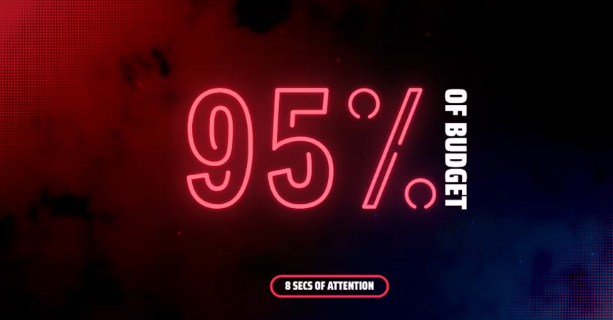
And yet only 5% of it goes to gaming, despite the industry reaching more than two billion gamers globally today and continuing to grow across every major market.
That’s not a rounding error. That’s a structural blind spot.
The audience moved. The budgets didn’t
The numbers back it up. According to Statista, more than 82% of internet users worldwide play video games on at least one device, with participation exceeding eight in 10 people across the core 16-44 age group. Gaming is no longer a niche activity. It’s mainstream consumer behavior.
Ask any teacher of eight-to-17-year-olds what their students are doing outside of school. The answer is remarkably consistent regardless of country, city or demographic. They’re gaming. Not occasionally, but daily and for hours.
The data supports it. Gaming participation is now effectively mainstream among younger audiences worldwide, with more than eight in 10 internet users aged 16-44 playing video games on at least one device.
Gen Alpha and Gen Z are not the TV generation. They’re not even purely the social media generation. Even when they’re not playing, they’re watching gaming creators, sharing gaming memes, following gaming communities or talking about games with friends. Gaming doesn’t compete with culture for Gen Z and Gen Alpha. It is culture. The streamers they watch, the memes they share, the communities they belong to are built inside and around games. Gaming is not a hobby for this audience. It’s where they spend their time, form identity and discover culture.
It’s also becoming one of the first places where brand preferences are formed. Gen Alpha is expected to influence trillions of dollars in household spending over the coming years, making the environments they choose to spend time in increasingly important for marketers.
Any brand trying to reach under-25s that’s not present in gaming is simply not present where it counts.
What players are actually doing for those 2 to 3 hours
This is where the attention argument gets interesting.
Players are not multitasking or scrolling between apps. They’re fully present, making decisions, building things, competing and socializing. Their avatars are extensions of themselves, in the same way that fashion, beauty and self-expression matter in the physical world.
For younger audiences, gaming is increasingly a social activity as much as an entertainment one, with shared experiences, creators and communities becoming part of everyday digital life.
That level of investment creates a completely different context for brand engagement. A brand that becomes part of that world is not an interruption. It’s part of the experience. Research shows social media users focus on a single post for around eight seconds. In structured in-game campaigns, average brand engagement times run between five and nine minutes per player. That’s not a marginal improvement. It’s a different category of attention entirely.
The self-expression layer most brands are missing
There’s a deeper insight here that most media plans walk straight past.
Players don’t just play games. They live inside them. Their avatars reflect who they are and who they want to be, much like someone might choose a specific brand of trainers to express themselves in the real world. Players make deliberate choices about how their digital identity looks and feels.
For brands in fashion, beauty, consumer goods and lifestyle, this is a genuinely untapped layer of consumer connection. When a brand integrates into that self-expression space authentically, it doesn’t feel like advertising. It feels like participation.
The brands already there are proving it works
This isn’t theoretical. Samsung, CeraVe and a growing number of global brands have run structured in-game campaigns and measured what happens. Samsung’s Galaxy S25 campaign across Roblox, Fortnite and Minecraft generated 9.1 minutes of average engagement time per player and a 27% increase in top-of-mind awareness. CeraVe saw unaided brand recognition increase by 29% among 13-to-18-year-olds after integrating into Minecraft and Roblox.
These are not gaming outcomes. They are brand outcomes, delivered by showing up where the audience actually is.
So what’s the hold-up?
The biggest missed opportunity in advertising is not some emerging platform nobody has heard of. It’s a channel with over two billion users, measurable reach and engagement times that social media cannot compete with, sitting at 5% of global media spend.
While brands debate whether gaming deserves a line in the budget, those two billion-plus players are already there, fully engaged and waiting.
The brands that move first will not just find an audience. They’ll find attention.