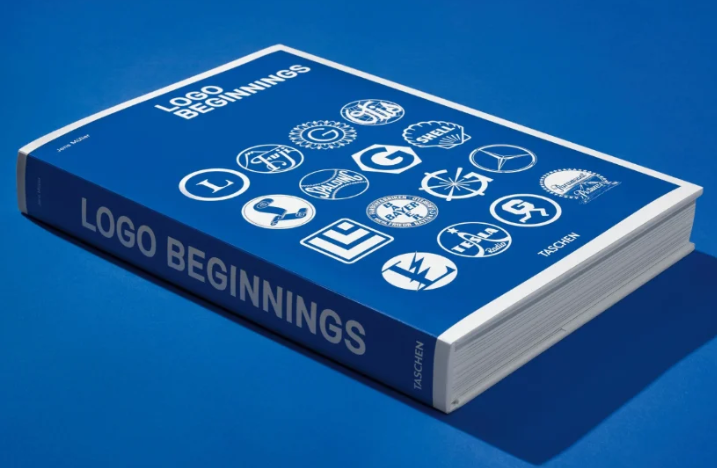
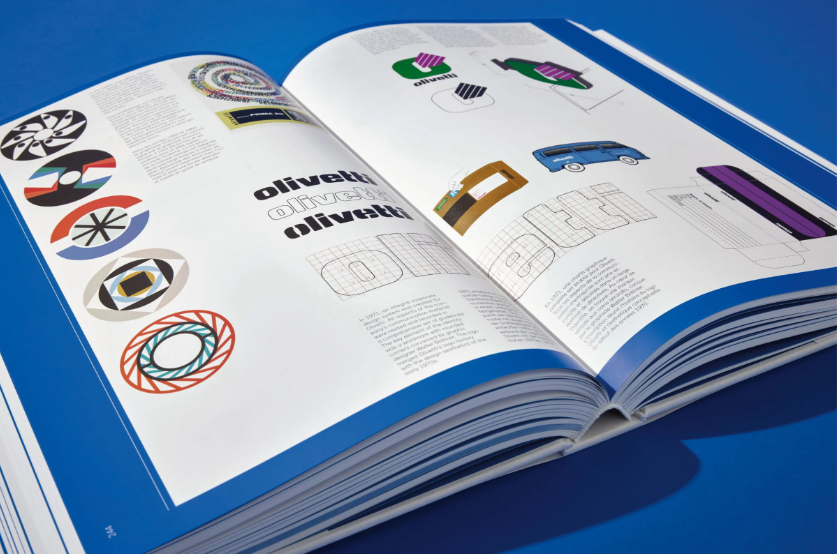
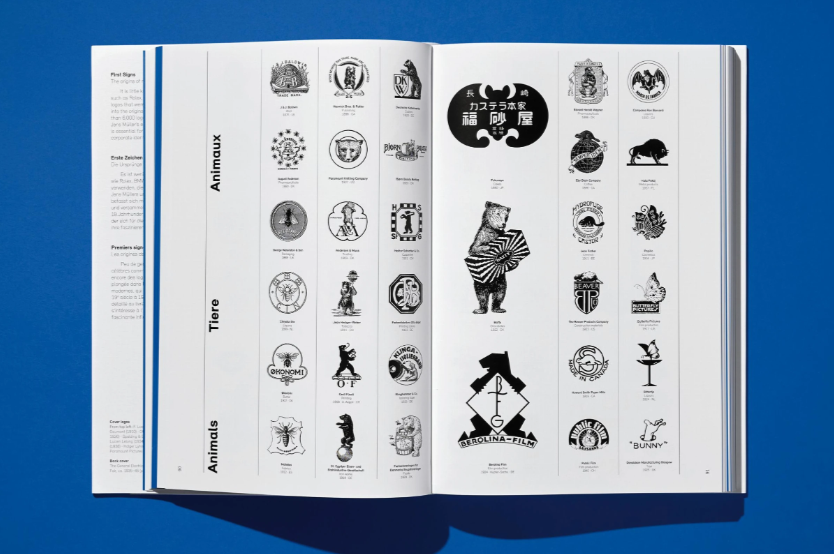
Logo Beginnings explores how recognizable brand identities started long before their final forms. The book focuses on early sketches, drafts, and development stages that reveal the thinking behind well-known logos.
Rather than showing only polished results, the collection highlights experimentation and iteration. Rough concepts, alternate directions, and unfinished marks demonstrate how designers refined visual ideas into lasting identities.
The publication also emphasizes process over perfection. By documenting the evolution of logos, it offers insight into decision-making, typography, symbolism, and how small adjustments can reshape a brand’s visual language.
Visual comparisons between early concepts and completed logos allow readers to see how identities changed over time. This makes the book both a design archive and a study of creative development.
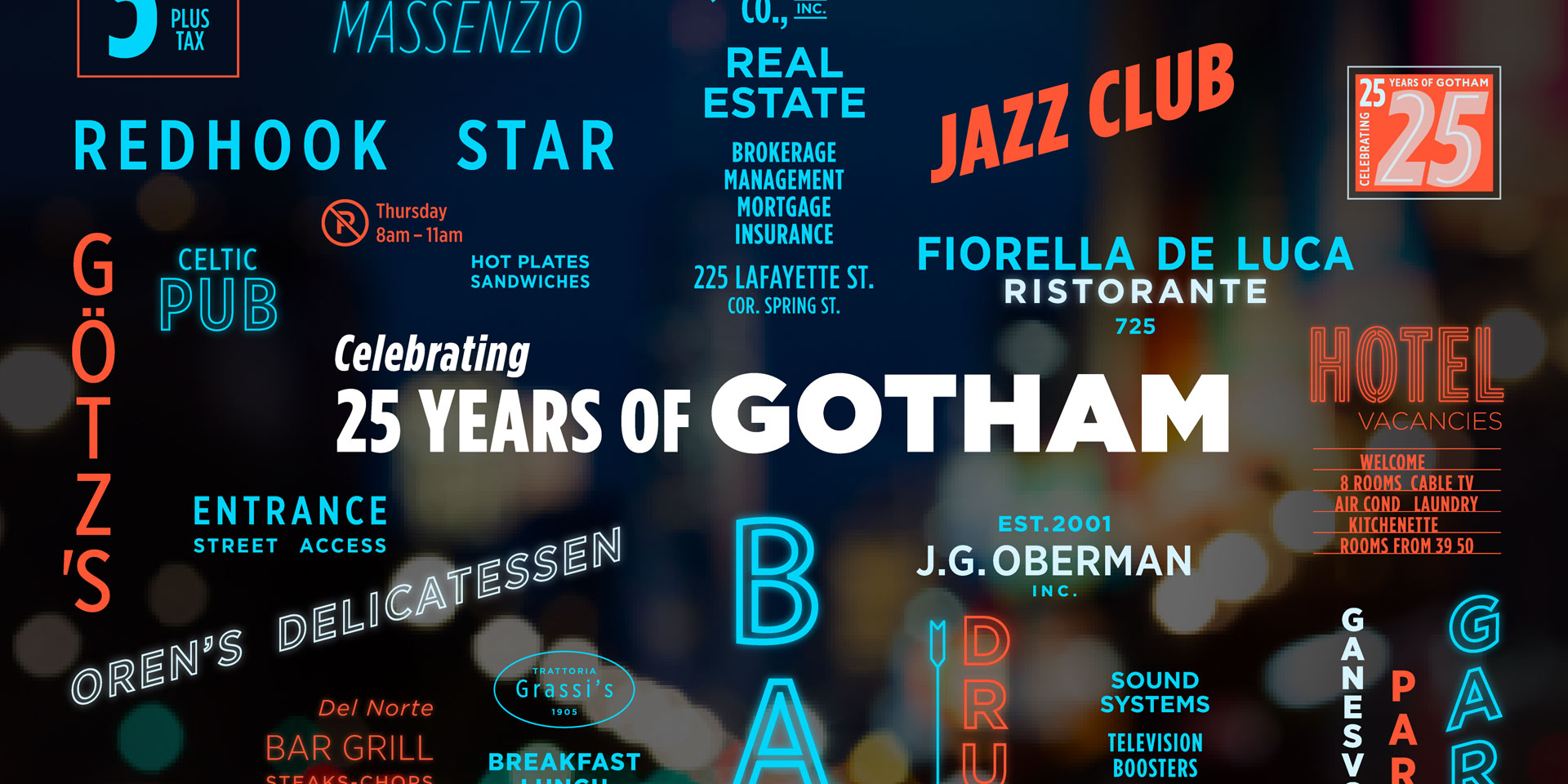
One of the most popular typefaces in the world, Gotham, has been upgraded by Monotype. Say hello to Gotham Variable, a major evolution of the iconic typeface, which introduces continuous control across weight and width in a single, performance-optimised file.
Gotham, designed by Jonathan Hoefler and Tobias Frere-Jones and published by Hoefler & Co., has been involved in various elements of global communication since it launched publicly on the January 2001 cover of GQ. It has been used by brands the world over, including Netflix and Coca-Cola, the United States Postal Service and Saturday Night Live. Twenty five years later, it enters a new era that enables a new level of creative control and adaptability.
Gotham Variable consolidates multiple static files into a single streamlined file, which improves performances, reduces load times and simplifies implementation across platforms. It’s also highly adaptable, working seamlessly across screens, systems and contexts while maintaining Gotham’s iconic qualities. There are also 54 new intermediate styles, including subtle new shades of weight and a new Compact width.
Why has it been upgraded now? “We’re at a point with variable fonts that they are more what we have come to expect from a workhorse family, rather than an experiment, an add-on, or a nice-to-have,” explains says Sara Soskolne, previously senior designer at Hoefler & Co., now executive creative director at Monotype and lead designer for Gotham Variable.
“Reverse engineering variability into an existing and very widely used family is a trickier task than creating a new family that’s conceived as variable from the start. Since Gotham was not designed with variable functionality in mind, I think it made sense to wait a little to make sure variable fonts had reached a critical mass of adoption and expectation before embarking on creating a variable version of a family like Gotham.”
(Image credit: Monotype)
Gotham was also an obvious choice for an upgrade. “Gotham has spent 25 years earning an extraordinary kind of trust, from political campaigns to billboards, and across some of the world’s most iconic brand identities,” explains Sara.
“With Gotham Variable, we tried to imagine what this typeface could become without losing sight of its powerful legacy. Many of the styles in Gotham Variable have never existed before. Making them feel like they always belonged was the hardest part, and the most essential.”
(Image credit: Monotype)
As well as its technical improvements, Gotham Variable features expanded language support, including Vietnamese, supporting complex diacritics, stacked accents and tone marks. It also includes enhanced Cyrillic and Bulgarian.
“Adding language support to an existing typeface family is no quick and easy task. Getting the proportion and style right for these new glyphs was essential to stay true to Gotham’s DNA. Particularly for the hook and horn, matching Gotham’s expressiveness was key,” says Jordan Bell, senior type designer at Monotype.
For Sara, the connection to Gotham was personal: “My relationship with Gotham stretches back nearly 20 years, which is when I first started collaborating on expansions to what was then still quite a small family. This progressed from smaller initial forays, like adding extended numeric sets and expanded Latin language support, to filling in the width range between Gotham’s original and Condensed extremes to create what became its full 66 styles that were released in 2009; and then to expanding that entire family to cover the Greek and Cyrillic scripts for its 2015 release.
“More recently, I worked with Manual Creative on several bespoke decorated styles of Gotham Condensed for the Obama Foundation, which was a lovely way to reconnect to the family and sort of test the limits of how far it can be pushed while still feeling like Gotham before leading this new Variable expansion.
“And, living in NYC this whole time, on a personal level I’ve had the good fortune of living with some of Gotham’s vernacular sources in signage around the city, to the extent these still exist.”
(Image credit: Monotype)
In terms of challenges on this project, there were a few key issues: “To my mind, the main challenges came from the fact of grafting things like variability and Vietnamese language support onto an existing family,” says Sara.
“In adding variable functionality, suddenly all the spaces in between Gotham’s static styles – which were where we hid the sleight of hand involved in making them look the way they do – are now visible and completely accessible to users. So we had to be very intentional and critical about how that was handled.
“In adding Vietnamese support, because it’s a language that includes stacked accents (which often require more vertical space to incorporate), but we couldn’t go changing the line height of Gotham, we needed to include these across the whole design space without them feeling cramped or crowded.
“Underlying all of this is the temptation, once you’re opening up the hood, to turn this into a Gotham 2.0 and revisit some of those very early decisions that are causing some trouble later on. But we agreed very early on to keep this new expansion fully backwards compatible and only expand what’s available to users, not to change anything that existed previously, which I think was absolutely the right call.”
I asked Sara which element on Gotham Variable she was most proud of: “I’m probably most proud of how this all came together to create a variable version of such a beloved family that still feels utterly like Gotham at every moment.
“Since I wasn’t one of the original designers of Gotham, but have increasingly become its custodian over the years, I have a deep sense of responsibility to the intent behind it and the DNA that was created by those original designers. That can make some decisions (such as adding new styles) feel more challenging, but it also means it feels more rewarding when I get it right.
“So, I’m particularly excited about the new Compact width we’ve added in between the original and Narrow widths, which is meant to visually look just like the original width but set more efficiently in text.
“And even after staring at it for months, I never get tired of playing with the variable width slider and watching those stroke endings change their orientation in between the Extra Narrow and Condensed. There’s still plenty sleight of hand in this version, we just had to find different places to hide it!”
Creative Bloq is now easier to access than ever before with our on-the-go app, which brings you all the content you know and love from our website, but in a super-streamlined design.
Rosie Hilder is Creative Bloq’s Deputy Editor. After beginning her career in journalism in Argentina – where she worked as Deputy Editor of Time Out Buenos Aires – she moved back to the UK and joined Future Plc in 2016. Since then, she’s worked as Operations Editor on magazines including Computer Arts, 3D World and Paint & Draw and Mac|Life. In 2018, she joined Creative Bloq, where she now assists with the daily management of the site, including growing the site’s reach, getting involved in events, such as judging the Brand Impact Awards, and helping make sure our content serves the reader as best it can.
For years, the startup advantage was speed. Big companies had the money, the teams, the brand recognition, and the distribution. Small teams had urgency.
But AI is changing what urgency can actually produce.
A founder with the right tools can now test product ideas faster, build internal systems earlier, automate repetitive work, personalize outreach, analyse customer behaviour, and ship updates without waiting on a full department. The gap between a five-person team and a fifty-person team is no longer only about headcount. Increasingly, it is about how well that team uses leverage.
This is why the most interesting companies right now are not always the ones hiring the fastest. They are the ones learning how to build, operate, and make decisions at the speed of AI without losing control.
Why AI Gives Small Teams an Edge
Large companies often have more money and more people, but they also move through more meetings, approvals, and internal processes. Small teams do not have to wait as long to act.
AI helps them move even faster by reducing manual work. A founder or operator can use AI to summarize meetings, organize customer feedback, draft follow-ups, create marketing assets, improve reporting, and test new ideas quickly.
The result is not just more output. It is better momentum.
Speed Still Needs Strategy
Moving fast is powerful, but only when it is done with focus. AI can help teams work faster, but it can also create confusion if used without a clear plan.
The best small teams are not using AI just because it is popular. They are asking smarter questions:
What should we automate first?
What still needs human judgment?
Where are we wasting the most time?
Which systems will help us scale without adding unnecessary complexity?
That is where the real advantage begins.
A Timely Conversation for Boston Builders
For founders, operators, and early-stage teams, the big question is no longer whether AI matters. The question is how to use it in a practical way to build faster, stay lean, and compete with bigger teams.
That is the focus of UGLY TALK: HOW TO ACTUALLY BUILD AT THE SPEED OF AI AND OUTSHIP A BIGGER TEAM in Boston.
This event is designed for people who want to understand how small teams can use AI to work smarter, automate better, and avoid the common mistakes that slow companies down.
Final Thought
AI is changing what small teams can accomplish. The teams that win will not be the ones using the most tools. They will be the ones using AI with focus, discipline, and clear execution.
For anyone building, operating, or scaling with a lean team, this is a conversation worth joining.
Ryan Hawkins is a dedicated growth hacker, specializing in empowering startups and small businesses to thrive in competitive markets. Leveraging innovative, data-driven strategies, Ryan uncovers untapped growth opportunities for these businesses, helping them stand up to larger competitors. His focus isn’t on personal success but on the milestones achieved by the businesses he serves, underscoring his belief that every small enterprise can punch above its weight with the right strategies.
Created by Uncommon Creative Studio, The Markup Marché is stocked with everyday grocery products relabelled with grossly inflated prices
Skincare advertising is full of products promising ‘magic’ results and ‘medical-grade’ formulas, often dressed up in the kind of glossy branding that’s designed to heighten perceived value. But The Ordinary has spent the last few years doing the opposite, dismantling the industry’s marketing machinery in full public view.
The brand’s recent work with Uncommon Creative Studio has consistently challenged beauty’s reliance on pseudoscience and celebrity culture. Last year’s The Periodic Fable campaign turned skincare buzzwords into a fake periodic table of ‘elements with zero science’, while another activation mocked the economics of celebrity endorsements by revealing how much consumers effectively pay for famous faces in beauty ads.
All images: The Ordinary / Uncommon Creative Studio
Now, The Ordinary are taking aim at another industry bad habit: inflated pricing. Running this month across six cities globally, The Markup Marché is an immersive retail activation that transforms ordinary supermarket goods into absurdly overpriced “luxury” items.
Created once again by Uncommon, the pop-up spaces resemble the kind of minimalist concept store currently dominating luxury culture. But the products quickly reveal the joke. A banana is relabelled as an ‘All-Natural Magical Energy-Boosting Bar’ and priced at $175.90, an avocado becomes a ‘100% Natural Glow-Enhancing Vitality Orb’ retailing for $305.90, while a toilet roll is rebranded as a ‘High-Retention Cleansing Cylinder’ costing $96.20.
According to research cited by the brand, 20% of UK consumers say they would pay up to £20 more for a product described as ‘magic’, while US shoppers are willing to spend 45% more on identical products if the packaging appears more premium. The Markup Marché turns those statistics into a physical metaphor, with shelves, signage and installations unpacking the pricing psychology behind beauty marketing.
Alongside the store itself, visitors can explore interactive elements including a ‘naming department’, where they can generate exaggerated ingredient labels, and The Jargon Bar, which applies skincare-style buzzwords to juices and drinks.
Nils Leonard, co-founder of Uncommon, said: “We wanted to take the codes the beauty industry relies on – language, packaging, presentation – and apply them to the most familiar products possible. When you see those same tactics used on everyday items, it exposes just how powerful and sometimes absurd those signals of value can be.”
The activation launched in Toronto before being rolled out across London, Paris, Melbourne, São Paulo and Mexico City, extending The Ordinary’s increasingly pointed critique of the industry it operates within. In a market saturated with miracle claims and marketing jargon, The Ordinary’s commitment to openness and transparency remains its sharpest point of difference.
Australian consumers are increasingly disengaging from brand communications that fail to feel timely or relevant, as new research highlights a growing gap between marketing intent and execution across Australia.
The 2026 SAP Engagement Index from SAP shows that 58 per cent of Australians say most brand emails are irrelevant, while just 16 per cent report reading subject lines at all.
At the same time, 46 per cent of consumers say they now care less about the brand itself and more about the overall experience, underscoring a shift in how loyalty and attention are being earned – or lost.
The findings come as brands continue to increase the volume of messages across email, mobile and digital channels. However, SAP warns that rising output is not translating into better engagement, with fragmented data systems, disconnected platforms and siloed teams preventing true personalisation from being delivered in real time.
Instead, many so-called personalised messages are arriving out of context – disconnected from live customer behaviour, service interactions or purchase intent – and are therefore being ignored.
Despite this, consumers are still responding positively when relevance is achieved. The research found that 60 per cent of Australians value localised content, 54 per cent appreciate highly personalised engagement, and 56 per cent want personalised product recommendations, indicating that attention is still available for brands that can deliver it in the moment.
“The divide we see isn’t creativity or ambition,” said Sara Richter, CMO of SAP Engagement Cloud. “When customer, operational and content systems don’t talk to each other, engagement becomes guesswork. That problem only grows as we move towards agent-driven shopping, where relevance is decided instantly.”
Richter said the core issue is no longer strategic understanding of personalisation, but operational execution – with many organisations unable to act on live data quickly enough to influence customer experience while it still matters.
The challenge is becoming more pressing as artificial intelligence reshapes how consumers discover and evaluate products in real time. SAP’s research suggests that brands unable to respond dynamically risk becoming invisible in increasingly automated, intent-driven environments.
That shift is also reflected in SAP’s expanding partnership with Google Cloud, which is focused on helping marketers unify customer data and activate insights faster across SAP CX systems and AI tools such as Joule with Gemini Enterprise. The integration is designed to allow brands to move from insight to action in real time, rather than reacting after engagement opportunities have passed.
“For marketers, this isn’t about sending more messages,” Richter added. “It’s about using AI to turn live signals into meaningful experiences at scale. Brands that can do that will stand out; those that can’t will increasingly be ignored.”
In the retail sector, Freedom Furniture points to the operational complexity driving the need for more advanced systems. “When you’re managing 70,000 products and customers expect tailored experiences across every touchpoint, AI-driven enterprise-wide solutions aren’t optional – they’re operational,” said Federico Jalil.
“The scale of what customers demand has simply outgrown traditional tools and human effort alone.”
Melania is B&T’s senior reporter, covering all things martech and adtech across the industry. When she’s not chasing breaking news, she’s chatting with industry leaders to discuss the big changes in the marketing, advertising, and media landscape. She kicked off her journalism career in 2022 at TV3 in New Zealand as a digital reporter and producer, later moving into a technology reporter role that brought her to Sydney. Driven by a desire to push herself into a new niche, she joined B&T at the start of 2026.
Most leaders think they know how they’re perceived. They know their intentions. They know their accomplishments. They know what they want people to think about them. But your reputation doesn’t live inside you. Your personal brand lives in the hearts and minds of others. And now, increasingly in AI systems.
AI Is A Powerful Personal Brand Builder For Leaders
AI can become a surprisingly powerful tool for growing your brand. It can act almost like a reputation mirror, helping leaders identify patterns, strengths, inconsistencies, differentiators, and even blind spots that are difficult to see on their own. It helps leaders build and express the authentic leadership qualities that are essential for leading in our tech-infused workplace.
1. Use AI to Become Self-Aware
Having a strong and recognizable brand is essential for leaders. It helps the people they lead understand and trust them. Focusing on clarifying and expressing your brand is part of your job as a leader. The most successful leaders are self-aware. That means self-reflection and external perception are aligned. Sao Paulo based Personal branding and AI expert Paulo Moreti put it this way, “AI exists to transform subjective perceptions into strategic data, allowing leaders to use technology to scale their presence and influence. This ensures that they are never replaced, but rather empowered.”
2. Use AI to Clarify What Makes You Different
Your personal brand starts with clarity. AI can help you uncover patterns in your experience, strengths, values, communication style, and accomplishments. It can help you describe your unique promise of value. AI can provide the external perspective, identifying themes across your resume, bio, LinkedIn profile, testimonials, results from 360 surveys, and past content. And once you become truly self-aware, you can prompt AI to help you understand your brand differentiation. You can even ask AI to compare your positioning against others in your field by analyzing positioning, communication style, visibility, audience, and differentiation.
3. Use AI to Strengthen Your LinkedIn Presence
Most leaders know LinkedIn matters. They know LinkedIn can be an exceptional reputation builder, but they struggle with what to say and how to say it. AI can dramatically speed up the process. To prevent yourself from sounding like a regurgitated version of all the people who share your job title, craft your own draft profile. Then ask AI to:
Improve your Headline and About section so they are more on-brand and differentiated from your peers
Generate post ideas based on your expertise and unique point of view
Turn meetings, presentations, or articles into content you can use in your LinkedIn profile and posts
In addition to taking the lead with the content drafts, don’t automatically accept all the improvements and suggestions your AI tool provides. Review all content and refine it to ensure it’s completely you.
4. Use AI to Support Thought Leadership Content Creation
The internet is already flooded with generic, AI-generated content. The goal is not to contribute to AI slop. It’s to amplify your perspective, expertise, and lived experience. To grow your brand, you must create content that’s unique and valuable to your audience. You cannot offload that task solely to AI. But you can use AI as your muse, editor, and proofreader. With AI you can:
Turn voice notes into articles
Repurpose presentations into posts, newsletters, videos, and articles
Generate outlines for articles or presentations
Brainstorm stories, hooks, titles, and examples
Transform one idea into multiple content formats. This helps with both visibility and consistency.
AI works best when it enhances human insight rather than replacing it. It struggles with originality and lived experience. That’s why you need to be part of the equation.
5. Use AI to Become More Visible Without Spending All Day Online
One of the biggest barriers to personal branding is time. Many leaders know they should be more visible, but visibility often gets pushed aside by meetings, deadlines, and daily responsibilities. Despite all the ideas you have for articles and videos and your desire to “be out there,” work can take up so much time that your visibility is limited. Ask AI to:
Create content calendars, and batch content creation
Draft networking messages and follow-ups (that you refine)
Summarize articles or industry trends into your own perspective
Prepare comments for strategic engagement on LinkedIn
Visibility becomes easier when AI partners with you to make it happen.
6. Use AI to Improve Your Communication Skills
Leaders are communicators, and communication is one of the most powerful ways to strengthen a personal brand. In fact, communication shapes your reputation faster than almost anything else. To enhance your communication skills, use AI as a coach, sounding board, editor, and mentor. AI can help refine communication. But trust, warmth, energy, and authentic presence still come from the human being delivering the message. Work with your favorite AI tool to:
Practice presentations with AI feedback
Improve storytelling
Customize elevator pitches for different people and groups
Adjust your tone for different audiences
Get feedback on clarity, warmth, confidence, and conciseness
AI can coach communication, but authentic delivery still matters most. And that’s up to you.
7. Use AI to Build a More Human Brand
Ironically, AI is increasing the value of humanity at work. As tech becomes more capable, the qualities that make leaders truly valuable and memorable become more human. Qualities like empathy, authenticity, presence, encouragement, and connection help leaders motivate and engage their teams. AI can help leaders communicate more effectively with their people, but humanity is still what creates trust. Only you can inspire people, create belonging, and make others feel seen. AI can help you accentuate your humanity:
Use AI to remove jargon and robotic language
Analyse whether your content sounds authentic
Create more empathetic communication (especially for those challenging emails)
Spend less time formatting and more time connecting
Focus on stories, experiences, values, and POV
As your peers flood the world with uninspiring, AI-generated content, humanity becomes your differentiator.
Use AI To Scale Your Reputation, Not Replace Yourself
The goal of integrating AI into your personal branding activities is to become more efficient while remaining in the process. The more information AI has about your goals, voice, values, expertise, and communication style, the more effectively it can support you. When you engage with AI as a collaborator, you keep your voice, opinions, and personality intact, and enhance trust and credibility while expanding your reach. The leaders who thrive in the AI era will be the ones who use AI to become clearer, more visible, more connected, and most importantly, more human. Because in an increasingly algorithm-shaped world, humanity is becoming the ultimate differentiator.
William Arruda is a keynote speaker, bestselling author, and personal branding pioneer. He helps organizations boost engagement and impact through personal branding.Watch his complimentary session on upgrading your LinkedIn profile, network, and thought-leadership strategy.
Visibility makes you seen. Reputation determines whether you are chosen. That’s the difference most individuals, brands and even CEOs don’t understand. They believe that if they’re talked about enough, blogged about enough, tweeted about enough, they will be powerful. But getting seen is merely amplification. Sure, it drives exposure. Sure, it escalates reach. Sure, it puts your name into motion. But it doesn’t drive what others think of you when they see it. Reputation does. And outside social media, in the real world, perception is what actually governs results.
To put it simply, people don’t just react to visibility. They react to what that visibility represents. That’s why the reputation versus visibility discussion is not just about branding. It is about influence and understanding the difference between just sitting at the table and having real influence there.
Your Reputation In Relation To Others
Leaders must shift how they think about reputation. A leader—or an organization—has as many reputations as they have audiences, and the reputation belongs to each of these audiences.
The reality is that when you walk into a room, you are no longer managing a fixed identity for your brand. You are managing the interpretation of your brand by your stakeholders.
That is why being visible without a reputation architecture and management strategy is risky. The second your name, your company or your leadership brand is released to the public, a story will be made. That story could be true, skewed, partial or even opportunistic. Yes, it’ll be shaped by your actions—but also by timing, agenda, competition, media climate and audience bias. Once you go public, you begin to lose control. You stop managing information and start managing interpretation.
Executive Reputation And Corporate Risk
This is where leadership personal branding succeeds or fails. Take, for example, the issue of executive reputation. Highly-regarded leaders can greatly improve a company’s reputation, whereas any bad press related to them has the potential to destroy the firm’s reputation. Leaders’ positions are never neutral.
The business community will never draw a line between the leader and their firm, no matter how much executives want them to. Information about the company alone will not affect results. Perception of the person in charge seeps into perception of the company. And when it comes to reputation management, studies backed by lived experience show that silence does not help. Markets don’t wait or operate based on just proof. They look for patterns and whether things appear to be consistent with what they knew about you before.
And stories spread faster than truth. According to a landmark study, false news spreads more quickly and widely than true news on social media platforms. This means that narrative power can no longer be treated as an optional luxury in strategic communication. With speed favouring speculation, there is now only one sure strategy toward influence—credibility must be established in advance of any crisis.
The Momentum Of Reputation
Perception, left to run its course, will compound into reputation. There is no such thing as a static reputation. Rather, reputation works more like momentum. Each article, tweet, silence, endorsement, image, response and inconsistency between message and action gets filed away by the audience. Most signals add authority to your personal branding. Others subtract from it. Very few get forgotten. That effect becomes exponentially harsher in digital reputation management contexts.
The “2025 Edelman Trust Barometer” report reveals that although business continues to remain the most trusted institution in the world, trust varies considerably by country and audience. This reveals an important truth about trust and credibility today—it is fragile and can always be challenged. Consequently, influence does not reside with the most prominent player in the game—it resides with the most credible one.
Silence is also often seen as a protection mechanism for leaders. While sometimes it may indeed be protective, it’s brief. Silence in crisis communication and its effects on organizational reputation and risk perception reveal that strategic silence can affect an organization’s ability to obtain information from the public. The impact of crisis communication silence is negative in the public’s perception. Simply put, when people do not hear from you, they do not stop judging. That is why one of the biggest mistakes in perception management is believing that the lack of communication means the lack of interpretation.
In today’s hyper-speed AI-driven world, visibility can be engineered in bulk, credibility can be faked (for a time) and misinformation can spread before it is possible for humans to assess it properly. Recently, some government bodies issued warnings regarding the potential impact of deepfakes on the reputation of public institutions. The effect of fake content on public opinion and decision-making processes cannot be underestimated. Things like deep fake videos can lead to distrust in public bodies and their actions. The worst part is that the bodies or entities may not even be aware of what’s going on.
Key Takeaways For Public-Facing Professionals
Leaders, founders and public-facing professionals need to understand the following:
• Visibility is a tactic, whereas reputation is an asset.
• Narrative control is not manipulation. Rather, it is making sure that your presentation matches who you are and what you do.
• Corporate reputations are more than branding. They represent an essential form of strategic infrastructure that impacts perceptions of trustworthiness and strength.
• Modern leadership positioning requires nothing but consistency. Consistency between messaging and behaviour. Consistency between visibility and value. Consistency between promises made and promises kept.
In the end, real influence is a matter of reputation, not visibility. The world doesn’t reward presence as you may think. It rewards perception. And if reputation risk isn’t managed carefully, then it won’t matter if you were seen or heard. Your reputation will make all the difference anyway. In fact, if your reputation is exposed to public interpretation, it is already at risk. Assess it before someone else defines it for you.
Executive creative director brand & creative technology, Elmwood
Iván is a Spanish-born, London-based, executive creative director. He designs and develops future-ready brands for sustainable growth. Over the past 20 years, Iván has created multi-dimensional brand identities, online to offline design ecosystems, memorable experiences, and compelling communications for some of the world’s most interesting companies. Clients include The National Lottery, Evian, Mars, Ocado, ABInBev BEES, HALEON, Infarm, NIO, ZARA, Intercontinental Hotels Group, Yamaha, Nokia, Deutsche Bank, Siemens, Cunard, and Panasonic. At Elmwood, Iván is responsible for the development and adoption of Generative AI and Creative Technologies across the team.
Before you move into a new market, make sure you’ve earned the right to be there.
For a long time, our product lived in one room of the house: the nursery.
We built Hatch to help babies sleep, and it worked. We found our customers, earned their trust, and grew. By most measures, we had won our category.
So naturally, the business advice would be: stay there. Protect your turf. Don’t mess with what’s working.
We didn’t do that.
Instead, we launched into adult sleep believing our brand would carry over. But we quickly learned that brand loyalty had to be earned all over again. Adult buyers who’d never had a baby had no reason to know us. The product had to stand on its own merit. Here’s the framework I wish someone had handed me.
The question isn’t “Can we reach more people?”
Most brand expansion conversations start in the wrong place. Founders look at market size and growth maps. That’s all useful. But the more important question is simpler and harder to answer: Does this new strategy make sense coming from us specifically?
If the expansion requires you to become a different company, that’s a red flag. If it requires you to become more of the company you already are, that’s a green light.
We didn’t start our expansion with market research. We started with our mission. Nearly a decade of helping babies sleep has shaped a core belief: that what makes sleep work—environment, consistency, a reliable routine—doesn’t change based on age.
The adult sleep market was growing rapidly, and we realized we had something real to offer it. Not only because the market was big, but because the problem was the same one we’d been solving all along: sleep.
Let your customers lead
Founders should pay attention to customer behaviour.
Our customers showed us what they wanted before we even offered it. We found that nearly 25 percent of parents who bought a device for their nursery then bought a second unit for themselves. For them, the device’s value proposition didn’t stop at the nursery door, even though we weren’t marketing the device for adults.
When customers are already taking the action you’re considering, you’re not taking a risk—you’re catching up. The market is telling you something and you should listen.
The core value must be strong
Here’s the failure mode I see most often: Founders expand the brand before the original business is truly solid, because growth pressure demands something new. A new product line, a new segment, a new channel. The original strategy then gets less investment, less attention, and slowly stops being the best version of itself.
We needed to earn our place in the adult market the same way we earned it in the nursery—by solving the problem better than anyone else.
The discipline to stay put until you’re genuinely ready is one of the hardest things in brand-building. Growth pressure is relentless. Investors want to see new facets of the business. The industry rewards expansion announcements more than focusing on getting the core right.
I would urge you to resist that pressure. Your brand equity is your most durable asset. Stretching into spaces you haven’t earned yet chips away at what you’ve already built. And brand equity, unlike revenue, is slow to rebuild.
3 questions to consider
If you’re weighing an expansion right now, here are three questions worth sitting with first:
Can you articulate the expansion in a single sentence that doesn’t require an asterisk? If you need to caveat it—”we’re sort of entering X, for a specific kind of customer who also does Y”—the story isn’t clear enough yet. Clear expansion stories are ones you can say out loud without wincing.
Can you tell the difference between genuine customer pull and vocal-minority noise? A handful of loud requests aren’t a signal. Sustained behaviour—customers buying more, using the product in ways you didn’t design for, asking the same question at scale—is.
What are you protecting by staying put, and what are you risking by not moving? This one is often skipped. Knowing when not to expand is just as strategic as knowing when to press go.
We moved from nurseries to nightstands not because we were done with babies, but because we understood that sleep is sleep, and that the families we’d already helped could receive more from us than we’d originally imagined.
The brand didn’t change. It grew up. And we think that’s the only kind of expansion worth doing.
As younger travellers increasingly use TikTok like a search engine, the platform is expanding its push to turn viral travel inspiration into direct bookings.
TikTok may have officially completed its transformation from social media app to full-blown lifestyle ecosystem.
The platform has rolled out new in-app travel booking features, allowing users to book hotels, experiences, and other travel services directly through the app after discovering destinations on their feeds. According to Engadget, the feature is launching through partnerships with travel companies and booking providers, such as Expedia, streamlining the process from inspiration to purchase.
In other words: the “TikTok made me book it” era just got a lot more literal.
For years, TikTok has quietly become one of the internet’s biggest travel discovery tools. Entire destinations, restaurants, and hotels have gone viral overnight thanks to creators posting hyper-specific travel itineraries, aesthetic vacation recaps, and brutally honest reviews. Users already treat TikTok like a search engine, typing in phrases like “best Greek islands,” “hidden Italy restaurants,” or “Instagrammable hotels worth the hype” before they ever open Google.
Now, the app appears to be capitalizing on that behaviour in a bigger way.
The new booking integration could also mark a major shift in influencer marketing and travel content creation. Instead of simply inspiring trips, creators may now directly influence purchases inside the same app where viewers discover the content in the first place.
It’s another sign that social media platforms are increasingly prioritizing commerce over connection. TikTok Shop already turned viral beauty products and gadgets into instant purchases. Travel may be the next frontier.
The move makes sense. Travel content performs exceptionally well on TikTok because it combines escapism, lifestyle aspiration, and practical recommendations all in one scrollable format. A creator posts a dreamy boutique hotel in Ibiza or a hidden beach club in Albania, viewers immediately want to know the location, the price, and how to book it.
TikTok’s new feature eliminates the extra steps.
The rollout also reflects a broader shift in how younger travellers plan vacations. Instead of relying on traditional travel agents or lengthy blog guides, many Gen Z users now trust creators and short-form video recommendations more than polished tourism campaigns.
At this point, TikTok isn’t just influencing where people travel. It’s becoming part of the booking process itself.
Annmarie Gajdos is a Slovak-American on-camera host, journalist, and content creator born and raised in New York City. She covers pop culture, concerts, travel, and fashion, bringing an on-the-ground perspective to the moments shaping culture today. Known for her street interviews and live event coverage, she specializes in capturing real-time audience reactions and translating them into engaging, personality-driven storytelling. Read more