By Hal Crawford
Pepsico, the global giant, already derives more of its revenue from food than drinks. Last year it launched a corporate rebrand that is designed to carefully move away from cola-centricity.
The company’s global corporate affairs boss sat down with Mumbrella this week to explain the relaunch, which will see the new logo subtly appearing on billions of packages worldwide.
For Stephen Kehoe, Pepsico executive vice president and chief corporate affairs officer, the key constraint of his company’s corporate branding is also its biggest strength: “Pepsi”.
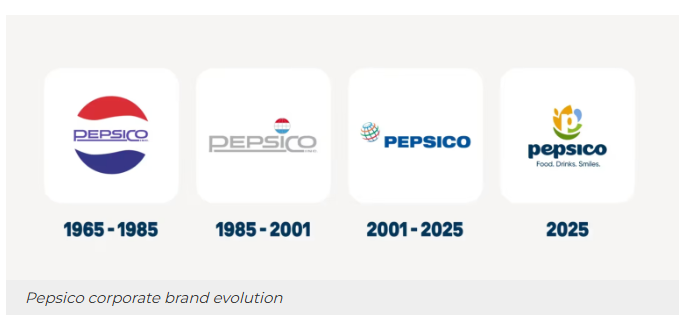
Solving that particularly devilish problem — maintaining the brand power but moving beyond the fizzy drink — has been the focus of the food giant’s first corporate rebrand in more than two decades.
”Obviously 25 years ago, we were a company steeped in beverages,” he told Mumbrella.
“Today we’re primarily a foods company. Second largest food company on the planet, largest food company in North America. We are steeped in agriculture, 60 crops, 30 countries around the world, localized production, involved in farmers … the old Pepsico way of looking at the logo didn’t really speak to all of that in a way that came across.
“All of that” is a lot.
Pepsico’s global revenues were US$94 billion last year, from sales of more than 500 food and drink brands. That places it behind only Nestlé (around US$115b revenue) in terms of the packaged food and drink market.
As Kehoe points out, the majority — 58% — of Pepsico’s revenue now derives from food, including products from big global brands such as Lay’s, Doritos, Quaker and Cheetos.
Local Pepsico food brands include Australian favourites such as Smith’s and Twisties.
Kehoe mentions how the new logo, which is styled all lowercase, seems to take the emphasis off the “Pepsi” brand recognition. On closer examination it seems clear the omission of Pepsi’s defining red, white and blue in the colour scheme is also significant.
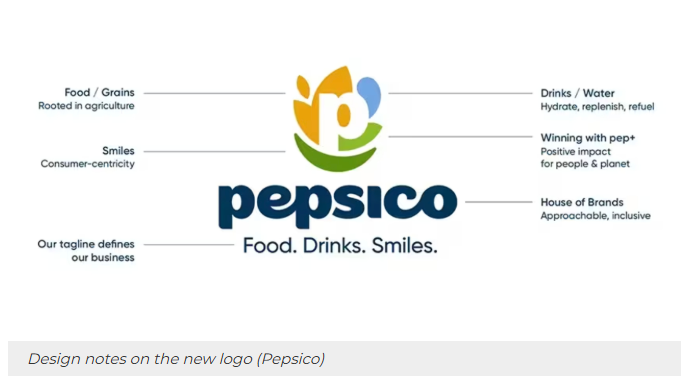
“[The old logo] was very much dominated by one particular brand in our beverage portfolio, Pepsi, and whilst we’re extremely proud of that heritage and will never want to let it go, it doesn’t speak to the overall company who we are today.”
The logo redesign work was done in-house, with brand senior design director Marco Escalante credited as the lead creative.
A question of strategic positioning
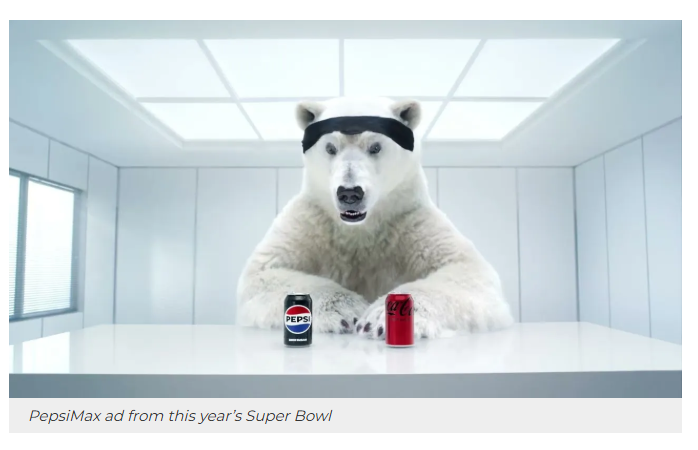
Kehoe declined to comment on his company’s long-time rivalry with Coca-Cola. The latter company remains squarely focussed on beverages, and is around half the size (US$48b global revenue).
“Our brand proposition only being linked to the fortunes of the beverages industry is a self-limiting proposition,” he said.
Kehoe seems focussed on building that brand proposition with regulators and the company’s 320,000 employees first. Pepsico as a house of brands for consumers would be a much more gradual build.
“For those of us that spend more time than others talking to policymakers, governments, regulators and all of this, I think this is a powerful new way of representing the company,” he said.
”It’s been a very quiet, understated launch to start to get the brand out there. And we hope through putting the logo on all of our packs around the world, consumers will begin to associate the name with the brands that they love and that will over time increase the overall halo and reputation for Pepsico itself.”
The spectre of advertising regulation
Kehoe was measured in discussing regulatory interventions targeting junk food advertising — for example, South Australia’s ad ban on government properties.
“Banning ways in which we can communicate to consumers is probably not the long-term solution in all of this,” he said.
“ It’s much more around the provision of transparent information about what’s in the portfolio, allowing us as a company to continue to innovate and reformulate, as we have over the years reduced the amount of salt within the portfolio, a switch to healthier oils reducing the amount of sugar.”
In a slightly different context — the question of his long-term outlook — he made a case for choice.
”I believe in the average human being’s ability to make rational, intelligent decisions for themselves and their families,” he said.
Macro economic conditions
Given the signs in Australia of a retail downturn, Mumbrella asked Kehoe his opinion of the general economic environment.
”It’s certainly a challenging moment,” he said.
“It’s an economy of two halves. You’ve got the affluent who continue to do very well, and then you’ve got at the other end of the spectrum, people who are finding it very difficult to make ends meet.
“You can see that actually reflected within the Pepsico portfolio itself … certain aspects of the portfolio continue to grow very well, which tend to be the more premium products like Red Rock Deli here in Australia … people are willing to pay for products that they perceive are healthier for them.”
So how will he know the relaunch has been a success? What are the core KPIs?
“Number one is people’s awareness that we are a food company as well as a beverage company,” he said.
“And then secondly … if people are able to name three, four brands which are part of the Pepsico portfolio and not just one or two.”
“We’re doing something which really is about making sure that people understand that Pepsico, the mother company, is one that has a real, deep voice to play in some of the biggest existential problems and challenges that we face in the world today.”
Note on house style: Mumbrella follows standard capitalisation in company names (for example, “Pepsico” rather than “PepsiCo”) except where non-standard capitalisation is required for legibility.
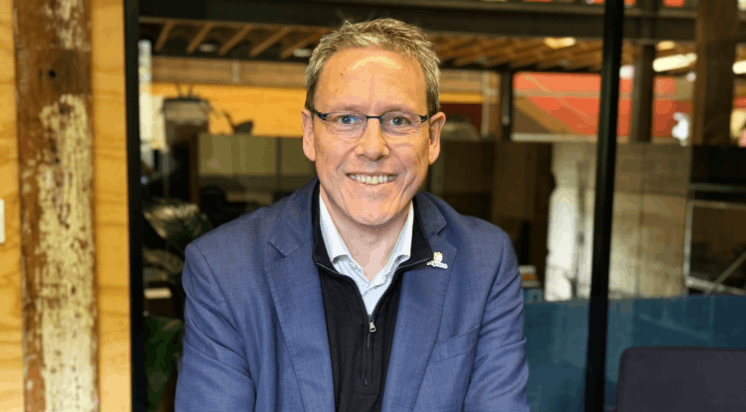
Feature image credit: Stephen Kehoe (Mumbrella)